
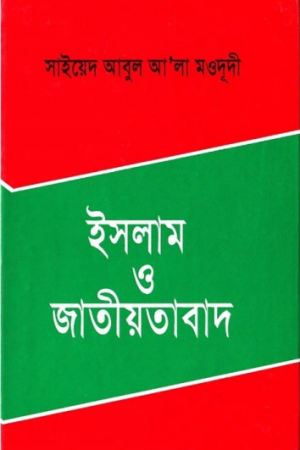
Islam and Nationality
Definition of a Nation:
With humanity’s first step from the impenetrable darkness of barbarism toward the luminous path of civilization, the idea of unity among the many emerges, and it becomes absolutely necessary for countless people to unite and live together with mutual sympathy and cooperation for a common purpose and system of welfare.
With the progress and gradual development of civilization, the scope of this collective unity becomes increasingly broad and expansive. Eventually, a time arrives when a vast number of people become included within it. This collective of many people is called a “nation” in political terminology. Although the words “nation” and “nationality” are entirely new inventions in their technical meanings, the sense in which they are used is as ancient as civilization itself. The form of human collectivity that is now called a “nation” or “nationality” also existed in ancient Egypt, Rome, and Greece, just as it exists today in national countries such as France, England, and Italy.
Essential Components of Nationality
There is no doubt that nationality initially arises from an innocent and unsullied idea. A group of people will work collectively to establish their shared interests and system of welfare, and will live as one nation in order to fulfill their social and collective needs—this is the primary purpose at the root of nation-building. But once a nation has been formed, the powerful influence of national hostility inevitably begins to act upon it. Indeed, the more rigid and firmly established this nationality becomes, the more intense its hostility and sense of difference also become. When a nation binds its members together for the attainment of its own interests and the preservation of its welfare—in other words, when it erects an impregnable wall of nationality around itself—it will inevitably distinguish those inside and outside that wall as “one’s own” and “the other.” In every matter, it will give itself precedence and importance over others. It will defend itself against others. If a conflict ever arises between the mutual interests of the aforementioned “one’s own” and “the other,” this nationality will strive with all its might to preserve its own interests, and will not hesitate in the slightest to sacrifice the interests of others. For these reasons, wars and truces will occur among them; yet in both peace and conflict, a mountain-high wall of difference will continue to stand between them. In technical terms, this attitude is called the blindness of nationality. This is an inseparable characteristic of nationality—it will inevitably remain attached to nationality under all circumstances; there is not the slightest doubt about it.
Fundamental Elements of Nation-Building
Among the many causes of unity and association, a particular nationality becomes established, whatever the cause may be. But the condition is that it must contain such a powerful cohesive force as will unite and inspire different people for the same message, the same thought and doctrine, and the same purpose and action; on the one hand, it will bind the nation’s diverse and countless parts in the unbreakable bond of nationality, intertwine them with one another, and make them all as firm and steadfast as an immovable mountain. On the other hand, it will exercise such dominance over the minds of individuals that, regarding the interests of the nation as a whole, they will all be united and, when necessary, fully prepared for every kind of self-sacrifice.
Unity and organization may have countless aspects, but of all the nationalities established from the beginning of the historical age until today, the foundations of all nationalities other than Islamic nationality have been established upon some form of unity based on the following factors. Many other forms of unity have also joined them as aids:
Unity of lineage: On this basis, lineage-based nationality is formed.
Unity of homeland: On this basis, region-based nationality develops.
Unity of language: Because it is a powerful means of establishing unity of thought and opinion, it has an immense influence on the establishment of a nation.
Unity of race: It awakens a feeling of kinship among people of the same race, and this feeling develops further, inspiring them to remain distinct from people of other races.
Equality of economic interests: It separates people associated with one kind of economic system from those who uphold another kind of economic system. On this basis, they struggle against one another to gain their own economic rights and interests.
Unity of the system of government: It connects the subjects residing in the same kingdom through relations of the same kind of governance and discipline, and sets a boundary of separation against the subjects of other states.
From the most ancient times up to this brilliant age of the twentieth century, all the fundamental elements of nation-building that it has been possible to identify will certainly be found among the elements mentioned above.
Two or three thousand years ago, Greek, Roman, Israelite, and Iranian nationalities were also established on the basis of the aforementioned fundamental elements. The nationalities of the very modern age—German, Italian, French, English, Japanese, and others—are likewise founded on precisely these bases.
The Root of Calamity
There is no doubt that the aforementioned unities adopted as the foundations of the world’s various nationalities have brought countless human groups together and united them. But no one can deny that these very foundations have also become a grave and deadly source of danger for all humanity. These foundations have divided humankind into hundreds and thousands of sections. And this division has been made so ruthlessly that one section may be pushed toward destruction, while not even the slightest change can be initiated in the other. One lineage cannot become another lineage. A speaker of one language cannot be regarded as a speaker of another. One race cannot be transformed into another race. The economic interests of one nation can never be completely identical to those of another nation. One state can never become another state. The conclusion is that among the nationalities established on these foundations, there can be not the slightest possibility of peace or reconciliation. Because of national hostility, they become engaged in an eternal struggle of rivalry, resistance, and vengeance. They will inevitably strive to defeat one another. They will even be prepared to destroy themselves forever through mutual warfare. Then new nationalities established upon these same foundations rise up again. In this way, it becomes an eternal volcano of calamity, unrest, and destruction in the world. In reality, it is the curse of Allah Almighty, the Devil’s sharpest weapon, by means of which he hunts his eternal enemy.
Ignorant Hostility
In fact, such nationality naturally awakens a barbaric spirit of hostility in people. It incites one nation to oppose another and express hatred toward it, simply because it is an entirely different nation. Such nationality has no relationship whatsoever with truth, honesty, impartiality, justice, or fairness. Merely being black is enough for a person to be hated in the eyes of a white person. A person is compelled to be hated, oppressed, crushed, and deprived of rights by the people of Europe or America merely because he is an inhabitant of Asia. A highly learned person like Einstein was hated by the German nation solely because he was of Israelite descent. Because Tashkidi was a black Negro, his kingdom was seized for the crime of punishing a European criminal.¹ For the civilized citizens of America, burning Negroes alive is not the slightest crime, because they are Negroes. The German and French nations may hate each other because they are divided into two distinct nations. The virtues of one are judged by the other to be entirely faults and defects. The independence of the Afghans of the frontier and the inclusion of the inhabitants of Damascus in the Arab nation are such crimes that, merely for this reason, dropping bombs from aircraft upon their heads and slaughtering the people of that country wholesale is completely justified in the eyes of the English and French. Yet they regard dropping such bombs upon the supposedly civilized inhabitants of Europe as barbaric. In short, this kind of national distinction makes people completely blind to truth and justice. And for this reason, the eternal principles of morality and civility are subsequently molded into the form of nationality. In some places oppression, in others falsehood, and elsewhere baseness are prescribed as principles of courtesy and moral character.
One person belongs to one lineage and another person to another; one is white and another black; one was born on the western side of a particular mountain and another on its eastern side; one speaks one language and another expresses his thoughts in a different language; one is a resident of one state and another a citizen of some other state—is humanity to be differentiated merely for these reasons? And must an unqualified, sinful, and dishonest person be given superiority over a qualified, honest, and truth-seeking person merely for this reason? Can the color of the outer skin be responsible for the purity or corruption of the soul? Can any intelligent person admit that mountains or rivers and seas can have any relation to whether moral character is good or bad? Can any sound-minded person accept that truth from the East can become false and invalid when it reaches the West? Can any person of sound conscience accept that the essence of virtue, courtesy, and humanity can be measured by the blood flowing through the veins, the language of the mouth, the place of birth, and the soil of residence? There is not the slightest doubt that all people will spontaneously and collectively answer “no” to these questions. Yet tribalism or lineage-based thinking, regionalism, and their other associates have the audacity to answer these questions with “yes.”
Fundamental Elements of Nationality
Leaving aside the aspects mentioned above, the modern foundations of nationality may be examined from their own perspectives. Here we shall endeavor to determine whether the aforementioned foundations are essentially and genuinely scientific, or utterly devoid of substance like a mirage.
Tribalism
Tribalism or lineage-based thinking is a major foundation of modern nationality. But what does tribalism mean? Tribalism means nothing more than blood relationship and unity. A blood relationship is established among a number of people through being born of the same father and mother; this is the first foundation of lineage-based thinking. It expands and appears as a family; from this arise the clan and the lineage. Upon reaching this final limit, a person becomes so distant from the original father of his lineage that his descent becomes a purely imaginary matter. In the sea of this so-called lineage, countless rivers and streams of foreign blood converge. Therefore, no sensible and intelligent person can claim that the “water” of this sea is entirely pure and unmixed—that it has flowed from its original source and that no other stream of water has mingled with it. Even after such mixing, people may accept a lineage as a center of union because of the compatibility of their blood. Then why cannot the unity of the blood of the original father and mother, which unites all the people of the world with one another, be accepted as the basis of unity? And why should all the people of the world not be regarded as descended from one lineage and belonging to one tribe? Those who are now regarded as the founders or “first ancestors” of various lineages or tribes all had ancestors who, somewhere higher up, were united; ultimately, all of them must be acknowledged as having sprung from the same original source. Then how can this division among people into “Aryan” and “non-Aryan” be accepted?
Patriotism
The unity of patriotism is even more vague and baseless than tribalism. The area of the place where a person is born is certainly no more than one square yard. If he regards only this tiny place as his homeland, then presumably he cannot call any country his homeland. But he draws a boundary extending hundreds or thousands of miles around this smallest place, calls the land within that boundary his “homeland,” and openly declares that he has no relationship whatsoever with areas beyond that boundary. In reality, this is nothing but the narrowness of his vision. In other words, there was no obstacle to calling the whole earth his own. By the very logic through which a “homeland” measuring one square yard can expand to hundreds or thousands of square miles, it can expand still further until the entire universe becomes his homeland. If people do not narrow their perspective, they can clearly see that whatever they take as imaginary boundaries—rivers and seas, hills and mountains, and so on—to separate one area from another is, in reality, part of the same vast earth; so how can these hills, mountains, rivers, and seas imprison them within a limited area? Do they not regard themselves as inhabitants of the whole earth? If they regard the entire world as their “homeland” or birthplace, why do they not regard themselves as inhabitants of the entire earth’s surface? If they regard the whole world as their homeland or birthplace, and call all humanity inhabiting the earth their “fellow countrymen,” and claim over the entire universe the same right they have over the specific place where they were born, why would that be wrong?
Linguistic Discrimination
It is undeniable that the unity and commonality of language give speakers of the same language ample opportunity for mutual conversation and the exchange of ideas. As a result, the curtain of unfamiliarity between people is lifted, and they can feel one another to be “their own” and “close.” But the fact that the vehicle of thought and opinion is the same does not mean that the thoughts and opinions will be identical and compatible. The same doctrine may be propagated in ten different languages, and not only is it possible for complete unity of thought and opinion to be established among speakers of those different languages—it is entirely natural. Conversely, ten different opinions may be expressed in the same language. Yet the people who hold those different doctrines expressed in the same language may be mutually different and completely separated. Therefore, the unity of thought and opinion—which is in reality the lifeblood of nationality—does not depend on the unity of language. Moreover, no one can say that unity and commonality of language necessarily produce unity of thought and doctrine. A serious question then arises: what influence does language have on a person’s humanity and individual good and bad qualities? Can a German speaker be given superiority over a French speaker merely because he speaks German? In reality, an individual’s inner qualities and characteristics are what matter, not language and the like. However, it cannot be denied that in the governance and regulation of a particular country, the management of all its affairs, and ordinary activities, a person who speaks that country’s language may be more beneficial. But in dividing humanity and determining national characteristics, linguistic difference can in no way be a sound basis.
Racial Discrimination
Racial discrimination in human society is the ugliest and most meaningless matter of all. Race is merely an external quality of the body; but it must be remembered that people have not attained the dignity of humanity because of their bodies—their souls and humanity are the sole reasons they possess this dignity. Yet the soul has no color or race. In such circumstances, what justification can there be for differentiating among people on the basis of red, yellow, black, white, and other colors? No distinction can be made between the milk of a black cow and that of a white cow, because the milk itself is what matters; blood or color has no significance there. But the bankrupt intellect of humanity has now drawn us away from people’s inner qualities and virtues toward the color of their bodily covering. What more grievous condition could there be than this?
Economic Nationality
Economic equality of interests is an illegitimate child of human selfishness; it is never a creation of nature. The human child is born from the womb endowed with the power to work. A vast field for effort and striving opens before him. The inadequate means of livelihood welcome him warmly. But in meeting his biological needs, he does not consider it sufficient merely that the door of sustenance be opened for him; he also considers it essential that the door be closed to others. When a large human group equally shares in such selfishness, the unity thereby created later greatly helps bind them together as a nation. At first glance, they think: by organizing themselves on the basis of economic equality of interests, they have secured their own interests and rights; but when numerous groups and nations erect such insurmountable walls of selfishness around themselves, human life becomes extremely unbearable because of their own deeds. Their own selfishness becomes fetters on their feet and handcuffs on their hands—in trying to close the door of another’s sustenance, one loses the key to one’s own storehouse of livelihood. Today this scene is clearly visible before our very eyes. The states of Europe, America, and Japan are suffering the consequences. They themselves had built economic fortresses, believing them to be perfect means of protection; today they cannot understand how to reduce them to rubble. Faced with such circumstances, will we still not regard the division of groups for earning a livelihood, and the establishment of national characteristics on that basis, as wholly unscientific and indicative of folly? Indeed, in Allah’s vast world, it is impossible to see what harm could arise from granting people freedom to seek and earn the sustenance Allah has provided.
Political Nationality
Administrative unity—the condition of being under the same government—is essentially temporary, fleeting, and baseless. A firm, permanent, and strong nationality can never be established on this foundation. The idea of binding the subjects of the same state together through their allegiance to it and forming them into one nation has never succeeded. It is true that so long as a state remains victorious, dominant, and endowed with invincible power, its subjects remain united and bound by its laws; but whenever the bonds of those laws loosen even slightly, peoples of different outlooks are compelled to scatter in all directions in an instant. After the central state power of the Mughal Empire weakened, there was not the slightest obstacle to the rise of distinct, politically based nationalities in various parts of India. The condition of the Ottoman Empire was similar. In the end, the Young Turks did indeed devote all their strength to building the edifice of Ottoman nationality; but at the slightest blow it was shattered like a house of cards. The example of Austria-Hungary is still more recent. The pages of history contain no shortage of such events. Yet even after witnessing these historical examples, those who believe it possible to establish a political nationality surely deserve thanks for their colorful dreams and extravagant flights of imagination.
World Humanism
The foregoing analysis has made it perfectly clear that none of the divisions into which the human race has been split rests on any scientific rationale. They are nothing but purely material and superficial divisions. Consequently, even a slight breadth of vision shatters the limits of each of them. The existence and permanence of these divisions depend solely on the darkness of ignorance, the limitations of vision, and narrowness of mind. The more the flashes of knowledge and science become vibrant and developed, the sharper and farther-reaching insight becomes, and the more expansive the heart grows, the more this curtain of materialistic and superficial distinctions is lifted. In the end, racism is forced to yield its place for humanity, and regionalism for the whole world. Even amid differences of race and language, the unity of humanity’s essential spirit remains manifest. In Allah’s earth, all of Allah’s servants share common economic interests. Within the limits of political systems, only a few shadows appear; revolving around the sun of fortune, they move across the earth and wax and wane.
Islam’s Liberal Ideology
This is precisely what Islam has proclaimed. Islam has recognized no material, physical, or sensory distinction between human beings. In Islam’s view, all people originate from the same source:
خلقكم من نَّفْسٍ وَّاحِدَةٍ وَّ خَلَقَ مِنْهَا زَوْجَهَا وَبَثَّ منهُما رِجَلاً كَثِيرًا وَّنِساءً – (النساء: 1)
“Allah created you from a single person, then created from him his mate, and from the two spread countless men and women throughout the world.” —Surah al-Nisa: 1
Differences in people’s places of birth or burial are not fundamental differences; essentially, all people are completely one:
وهُو الَّذى انْشاْكم من نَّفسٍ وَّاحِدَةٍ فَمُستَقَرَّ وَّمُستَوْدَعٌ ط – (الانعام: 98) “He created you from a single soul, and for each of you there is a dwelling place and a repository.” —Surah al-An‘am: 98. Then the profound truth concerning differences of lineage and family was revealed:
يَاَيُّها النَّاسُ اِنَّا خلقناكم من ذكَرٍ وَّ اُنْثى و جعلناكم شعوبا وَّقبائلَ لِتِعارَفوا ط اِنَّ اكرمكم عند الله اتقاكم ط – (الحجرات: 13)
“O mankind! We have divided you into peoples and tribes so that you may recognize one another. But in reality, the most honored of you in the sight of Allah is the most pious and God-fearing among you.” —Surah al-Hujurat: 13
That is, the distinction between peoples and tribes was made solely so that they might know one another; it was not intended for mutual envy, hatred, pride, arrogance, quarrels, or disputes. Because of these outward differences and conflicts, it is not proper to forget humanity’s fundamental unity. The sole measure by which you differ from one another is moral character, actual conduct, honesty, and inclination toward sin.
Then Allah Almighty said that factionalism in human society and mutual conflict among different groups are a particular punishment from Allah Almighty. It afflicts you with the poison of mutual hostility.
اَوْ يلبسكم شِيِعًا وَّيُذيْقَ بعضَكم بَاْسَ بَعضٍ ط – (الانعام: 65)
“Or He will divide you into different factions and make some of you taste the strength of others.” —Surah al-An‘am: 65
Factionalism too has been counted in the Noble Qur’an among the same offenses for which Pharaoh was accursed and punished by Allah:
اِنَّ فِرْعَونَ علاَ فى الارْضِِ وَجَعَلَ اهلها شِيَعًا – (القصص: 4)
“Pharaoh acted arrogantly and proudly on earth and divided its inhabitants into different factions.” —Surah al-Qasas: 4
Then He said that Allah is the Owner of the earth and has invested the human race with the dignity of being His vicegerent on it. He has subjected all the things of the earth to human beings. Therefore, it is not necessary for people to remain enslaved to any particular region. The vast earth lies before them. If one place becomes inaccessible or unfit for habitation, it is very easy for them to move elsewhere. Wherever they go, they will find Allah’s limitless and inexhaustible blessings present.
At the time of creating humankind, Allah said:
اِنِّى جَاعلٌ فِى الارضِ خَليفةٌ ط – (البقرة: 30)
“I intend to place a vicegerent on earth.” —Surah al-Baqarah: 30
ألم تَرَ اَنَّ الله سخَّرلكم مَّا فِى الارضِ – (الحج: 65)
“Do you not see that Allah has subjected everything in the world to you?” —Surah al-Hajj: 65
أَلم تكن ارضُ الله وَاسعَةً فَتُهَاجِرُوا فِيْهَا ط – (النَّساء: 97)
“Was Allah’s earth not vast? Could you not migrate from one place to another?” —Surah al-Nisa: 97
وَمن يُّهَاجر فِى سبيل الله يَجِد فِى الارض مُرَغَمًا كَثِيْرًا وَّسَعَةً – (النِّساء: 100)
“Whoever migrates in the path of Allah will find abundant space and ample ease on earth.” —Surah al-Nisa: 100
Read the entire Qur’an: nowhere will you find a single word in support of racism, tribalism, or regionalism; the Qur’an addresses the whole human race and presents the Islamic call. It invites all humanity on the face of the earth toward welfare and goodness. It grants no special distinction or superiority, even to the slightest degree, to any nation or region in this regard; among all the lands of the world, it has established a special relationship only with Mecca. Yet concerning Mecca it says:
سَوَاءَنِ العَاكِفُ فِيْهِ وِالبَادِ ط – (الحج: 25)
“The original inhabitants of Mecca and Muslims from outside it are all completely equal in Mecca.” —Surah al-Hajj: 25
Concerning the ancient polytheist inhabitants of Mecca, it says:
اِنَّمِا المُشْرِكون نَجَسٌ فَلاَ يَقربوا المَسْجد الحرَام بَعدَ عَامِهِم هَذَا ج- ( التَّوب: 28)
“The polytheists are impure, so after this year they must not approach the Sacred Mosque—the Kaaba.” —Surah al-Tawbah: 28
The foregoing clear analysis proves that Islam has completely eradicated attachment to one’s homeland and regionalism. Now every Muslim can say: “Every country is my country, because it is the country of my Allah.”
The Conflict Between Tribalism and Islam
From the very first chapter of Islam’s rise, hostility and discrimination based on lineage, tribe, and attachment to one’s homeland appeared as the principal obstacles in its path.
The very people of Muhammad (peace be upon him) were the foremost in this regard. Pride of lineage and tribal and personal notions of aristocracy stood as an impenetrable wall between them and Islam. They said:
لَوْ لاَ نُزِّلَ هذا القران على رَجُلٍ من القَرْيَتَيْنِ عَظِيْم – (زخرف: 31) “If the Qur’an were truly a Book revealed by Allah, it would have been sent down to some leading man of Mecca or Ta’if.” —Surah al-Zukhruf: 31
Abu Jahl thought that Muhammad (peace be upon him) was merely claiming prophethood in order to increase the level of his family’s glory. He said:
“There had long been rivalry between us and the clan of Abd Manaf. We competed with them in horsemanship. We were their equals in food, hospitality, and charity. Now he has begun saying that revelation comes to me. By God, we will never accept Muhammad as truthful.”
This was not merely Abu Jahl’s way of thinking; it was the great error of all the polytheist Arabs. For this reason, all the other clans of Quraysh began to show hostility toward Banu Hashim. On the other hand, the people of Banu Hashim, also driven by this ethnic hostility, continued to support and assist Muhammad (peace be upon him), although many of them had not yet accepted Islam. Banu Hashim were besieged in Abu Talib’s ravine, and the entire Quraysh tribe severed all relations with them for this reason. The relatively weaker Muslim families, tormented by the harsh oppression and merciless persecution of Quraysh, were forced to migrate toward Abyssinia, while those of stronger lineage survived the oppression and persecution somehow through the strength of their family standing.
The Jews of Arabia were awaiting the appearance of a prophet in accordance with the prophecies of the prophets of the Israelite lineage. Because of the news they had spread, numerous inhabitants of Medina accepted Islam at the very beginning of the Noble Prophet’s (peace be upon him) preaching. But the Jews themselves could not believe in the final Prophet solely because of their sense of aristocratic lineage. Their objection was that the newly arrived Prophet had been born into the lineage of Ishmael instead of the lineage of Israel. This sense of superiority had so far misled and corrupted them that they formed an alliance with polytheists instead of with the monotheists.
The Christians there were in the same condition. They too were awaiting the forthcoming prophet. But they believed that this prophet would be born in Syria. They were wholly unprepared to accept a prophet from Arabia. When the Prophet’s (peace be upon him) letter reached Heraclius, he said to the Quraysh merchants: “I knew that another prophet would come, but I had not imagined that he would come from your lineage.”
When Islam’s invitation reached al-Muqawqis of Egypt, he too said: “I knew that another prophet would appear, but I had thought that he would be born in Syria.”
Among the non-Arabs of that time as well, this sense of superiority had become extremely intense. When the letter of the Prophet (peace be upon him) reached Khosrow Parviz, what was it that made him angry? He said: “A man from a slave people dares to address the king of the non-Arab world!” He regarded the Arab nation as inferior and contemptible. They were entirely unwilling to accept that a person capable of calling people to the truth could arise among such a nation.
In the eyes of the enemies of Islam, the Jews, awakening kindred hostility and pride of lineage among the people was an extremely sharp weapon to use against Islam. This was why they joined forces with the hypocrites of Medina. Once, by reminding the people of the Battle of Bu’ath, they kindled such a fire of envy, hatred, and pride between the Aws and Khazraj tribes of the Ansar that a dangerous situation arose in which the sharpened swords of both groups were about to be drawn and open combat was imminent. It was concerning this that the following verse was revealed:
يّايُّهَا الَّذينَ امَنُوا اِنْ تُطِعُوا فَرِيْقًا مِّنَ الَّذِيْنَ اُوْتُوا الكتَابَ يَرُدَّوكُم بَعْدَ اِيْمَانِكم كَافِرُوْنَ – (ال عمران: 100)
“O Muslims! If you follow a group from among the People of the Book, they will turn you back from faith to unbelief.” —Surah Al Imran: 100
Because of this pride in lineage and homeland, the hypocrites of Medina burned with rage when they saw a Prophet of the Quraysh lineage ruling in Medina and the Muhajirun moving freely through the date orchards of the Ansar. The leader of the hypocrites, Abdullah ibn Ubayy, used to say: “These dispossessed people of the Quraysh lineage have come to our country and become swollen with pride. They are like pampered dogs; now they have begun to bite their very benefactors.” Addressing the Ansar, he said: “You are the ones who took them onto your heads; you are the ones who gave them a place in your country. You gave them a share of your wealth and property. By God, if you abandon your support and cooperation with them today, they will become completely helpless.” The Noble Qur’an answered these statements as follows:
هُمُ الَّذِيْنَ يَقُلُونَ لاَ تُنْفِقُونَ على مِنْ عِنْدِ رَسُولِ الله حَتَّى يَنْفَضُّوا ط وَ لِلّه خَزَئِنُ السَّموات وَالارضِ وَلكنَّ المُنَافِقِيْنَ لاَ يَفْقَهُونَ – يَقُوْلُوْنَ لَئِنْ رَّجَعْنَا إلىَ المَدِيْنَةِ لَيُخْرِجَنَّ الاغَزُّ مِنْهَا الاَذَلَّ ط وَلِلَّهِ العِزِّةُ وَلِرَسُوْلِهِ وَلِلْمُةْمِنِيْنَ وَلَكِنَّ المُنافِقِيْنَ لاَ يَعلمون— (8–7)
“They are the ones who say: Do not spend anything on the companions of the Messenger of Allah, so that they may disperse. But these hypocrites do not understand that Allah Almighty is the Owner of the treasures of the heavens and the earth. They say: If we return to Medina, the honored will surely expel the humiliated from it. Yet all honor belongs to Allah, His Messenger, and all the Muslims, but the hypocrites do not know this at all.” —Surah al-Munafiqun: 7–8
It was the intensity of this sense of superiority that impelled Abdullah ibn Ubayy to accuse and slander Aisha. It was also because of the support of Khazraj that this enemy of Allah and the Messenger escaped punishment for his deeds.
Islam’s Jihad Against Aristocracy and Hostility
The foregoing discussion has made it clear that, after unbelief and polytheism, aristocracy and envy-based hostility founded on lineage and attachment to one’s homeland are the greatest enemies of Islam’s magnificent call and movement. For this reason, during his twenty-three years of prophethood, the Final Prophet waged the greatest jihad after that against unbelief against this ignorance of aristocracy and hostility, with the aim of eradicating it forever. Opening all the books of hadith and biography proves the truth of this beyond doubt. When one considers how the Noble Prophet (peace be upon him) eradicated distinctions based on people’s blood, soil, color, language, and high and low status, shattered the unnatural and impenetrable walls of mutual conflict and discrimination, and made all humanity equal and united as human beings, one is truly left speechless with wonder.
The Prophet (peace be upon him) declared in a commanding voice:
ليسَ مِنَّا مَنْ مَّاتَ على العَصَبِيَّةِ لَيْسَ مِنَّا الى دعى الى العَصَبِيَّةِ لَيْسَ مِنَّا قَاتَلَ على العَصَبِيَّةِ –
“The one who dies for aristocratic pride and hatred, the one who calls others to it, and the one who fights and struggles for it cannot be counted among my community.”
He said:
لَيْسَ لاَحَدٍ فَضْلٌ على اَحَدٍ اِلاَّ بِدِيْنٍ وَتَفْوًى – النَّاسُ كُلُّهمْ بَنُوادَمَ وَاَدَمُ مِنْ تُرابٍ –
“No superiority may be granted to one person over another on any basis except piety, observance of religion, and righteousness. All people are children of Adam, and Adam was created from dust.”
He shattered distinctions based on lineage, homeland, language, and color by saying:
لأ فَضْلَ لِعَرَبىٍّ عَلى عَجْمِىْ وَلاَ لِعَجَمِىْ عَلى عَرَبِىٍُّ كُلُّكُمْ اَبْنَاءُ اَدَمَ – (البخارى)
“No non-Arab has superiority over an Arab, nor an Arab over a non-Arab. You are all children of Adam.”
لأ فَضْلَ لِعَرَبىٍّ عَلى عَجْمِىْ وَلاَ لِعَجَمِىْ عَلى عَرَبِىٍُّ وَلاَ لِاَبْيَضَ على اَسْوَدَ وَلأ لِاَسْوَدَ على ابيَضَ الاَّ بالتَّقوى – (زَادِ المَعَاد)
“The Arab has no superiority over the non-Arab, nor the non-Arab over the Arab; the white has no superiority over the black, nor the black over the white. Superiority can be attained only through God-fearingness and observance of religion.”
اِسْمَعُوْا وَاَطِعُوا وَلَوْ اُسْتُعْمِلَ عَلَيْكُمْ عَبْدٌ حَبشىٌّ كَانَ رَأسُهُ زَبِيْةٌ – (البخارى)
“Listen and obey, even if a black Ethiopian slave with a raisin-sized head is appointed as your leader—listen to him and obey him fully.”
After the conquest of Mecca, when the Muslims’ armed power had humbled the proud and insolent heads of the Quraysh, the Noble Messenger of Allah (peace be upon him) stood to deliver a speech and proclaimed in a thunderous voice:
اَلأَ كُلُّ مَا ثَرَةٍ اَوْ مَالٍ اَوْ يُدْعى فهوَ تَحتَ قَدَمِىِْ هَاتَيْنِ –
“Know that all claims to pride, arrogance, glory, nobility and the like, and all claims relating to blood and property, are crushed today beneath my two feet.”
يَا مِعْشَرِ قَرَيْشٍ اِنَّ اللهَ اَذهَبَ عَنْكم نُخْوَةَ الجَاهِلِيَّةِ وَتَعَظُّمَهَا الاَبَا –
“O Quraysh! Allah has eradicated from you all the rancor, arrogance and pride of the Age of Ignorance, as well as ancestral glory and claims of superiority.” اَيُّهَا النَّاسُ كُلُّكم من ادمَ وَادمُ من ترابٍ – لاَفَخْرَ للاَنْسَابِ لاَ فَخْرَ للعربىِّ على العجمىِّ ولاَ للعجمىِّ على العرَبِىِّ اِنَّ اكرمكم عِنْدَ اَللهِ اَتْقَأكُمْ –
“O people! You are all descendants of Adam, and Adam was created from dust. There is no room for pride in lineage. An Arab has no superiority or glory over a non-Arab, nor a non-Arab over an Arab. The most pious and God-fearing among you is the most honored among you.”
After completing the worship of Allah, the Prophet (peace be upon him) would offer before Allah testimony and sincere acknowledgment of three matters. First, Allah has no partner. Second, Muhammad (peace be upon him) is Allah’s servant and Messenger. And third, all of Allah’s servants are equally brothers to one another.
The Basis of Islamic Nationality
Thus, Allah and His Messenger completely shattered the confined, inert, sensory, materialistic and superstitious foundations upon which the palaces of the world’s various nationalities had been erected. Out of their foolishness and extreme ignorance, people had divided humanity into various minuscule fragments on the basis of the unscientific conflicts and inequalities mentioned above—race, tribe, birthplace, language, economics and politics. Islam has shattered all of these with a devastating blow and, from the perspective of humanity, has made all people equal in class, status and rights.
After eradicating this barbarism of the Age of Ignorance, Islam presented a new concept of nationality based on knowledge. Islamic nationality does distinguish between people, but not on any inert, material or outward basis; rather, it distinguishes them spiritually, morally and humanely. A natural and true code has been presented before humanity—its name is Islam. All humanity has been invited to the servitude and obedience of Allah, purity and sincerity of heart and mind, and purity, honesty and adherence to religion in action. Then it was stated that those who accept this invitation will be regarded as one nation, while those who reject it will belong to an entirely different nation. That is, one nation of humanity is the nation of faith and Islam, and the totality of its individuals constitutes an ummah وَكَذَالِكَ جَعَلناكم اُمَّةً وَّسَطًا; the other is the nation of disbelief and deviation. Despite their mutual differences and disparities, its followers are counted as one group and one nation. وَاللهُ لاَ يَهْدىِ القَومَ الكافِرِيْنَ
There is no difference between these two nations in terms of lineage or tribe. The difference lies in belief and conduct. Thus, even two children of the same father may, because of the stated difference between Islam and disbelief, be regarded as separate and belonging to two nations; while two unrelated and unknown persons may belong to one nation because they share the same Islam.
Difference of birthplace, too, cannot be a cause of distinction between these two nations. Here the distinction is made on the basis of truth and falsehood. Truth and falsehood have no “homeland.” Two people from the same city, the same neighborhood and the same home may have different nationalities because of the difference between Islam and disbelief. And a Black man may, through Islam, become the brother of a Moroccan.
Difference of race is not a cause of national distinction here either. The color of outward appearance is insignificant in Islam; here only Allah’s color has importance, and that is the finest and most excellent color.
صِبْغَةَ اللهُ ط وَمَنْ اَحسَنُ مِنَ اللهِ صِبْغَةًIn the view of Islam, a white person and a Black person may be regarded as members of the same nation, while because of disbelief, it is entirely possible for two white people to belong to two different nations.
Difference of language is not a cause of distinction between Islam and disbelief either. In Islam, the language of the mouth has no value; what has value is the wordless language of the mind and heart. For this is spoken throughout the world, and everyone understands it. From this perspective, an Arab and an African may have the same language, while the languages of two “Arabs” may also be different.
Differences in economic and political systems are entirely irrelevant to the distinction between Islam and disbelief. There is no dispute here over wealth and property; the relationship of the wealth of faith is the most important question here. Not human sovereignty, but obedience to Allah, is the sole basis of political conflict and struggle here. Those who support and obey the Divine Government, and who have sacrificed their wealth and lives for it, are all one nation, whether they are inhabitants of Pakistan or Turkestan. And those who are enemies of Allah’s government and have sold their lives and property into the hands of Satan belong to an entirely separate nation. There is no room for dispute over which kingdom’s inhabitants or subjects they are, or under what kind of economic system they live.
Thus, the boundary or limit that Islam has prescribed for nationality is not any sensory, inert or material thing; it is entirely a scientific boundary. Two people in the same house may be separated from each other because of this boundary. Conversely, two people located in the Far East and the Far West may belong within that boundary.
There is some Urdu writing here.
The central point of this circle of Islamic nationality is the kalimah—“There is no deity but Allah; Muhammad is the Messenger of Allah.” Friendship and enmity, everything, are determined on the basis of this kalimah. Its affirmation unites people, while its rejection causes a final separation among them. Whoever is separated by this kalimah cannot be joined by any bond or relationship of blood, soil, language, race, food or system of government. Likewise, those whom this kalimah unites cannot be separated by anything. No language, tribe or race, wealth or property, or dispute over land has the right to establish any discriminatory boundary among Muslims within the sphere of Islam. Whether a Muslim is Chinese or Moroccan, Black or white, Hindi-speaking or Arabic-speaking, Semitic or Aryan, a citizen of the same state or an inhabitant of different states, all belong to the Muslim nation. They are members of Islamic society, citizens of the Islamic state, soldiers in the Islamic army, and custodians of Islamic law and regulations. No branch of Islamic Shariah—whether worship, mutual transactions, social order, economics, politics or any other aspect of life—makes the slightest distinction among Muslims on the basis of sex, language or birthplace, nor does it call anyone superior or inferior to another.
Islamic Principles of Organization and Bipen
However, it would be a serious mistake to suspect that Islam has completely denied all human and practical relationships. Islam has instructed Muslims to maintain relations of kinship and has expressly prohibited severing them. It has strongly urged obedience to and compliance with the instructions of parents. It has established inheritance among blood relatives according to the laws of inheritance and recognized the first right of close relatives in charitable giving. It has commanded people to protect their families, homes and wealth from the attacks of enemies. It has ordered fighting against oppressors, and those killed in such wars have been called martyrs. It has taught the practice of sympathy, good conduct, affection and love toward every person, regardless of religion, in all affairs of life. Nothing in any instruction of Islam indicates—or can be made to indicate—that Islam has prohibited striving to serve and protect one’s country and nation, or treating non-Muslim neighbors with peace and courtesy.
The instruction Islam has given concerning people’s relations with one another is merely the fitting and natural expression of those practical relationships. But there is certainly a fundamental difference between Islam and non-Islam concerning nationality. This difference has also become especially clear in that the other people of the world have based nationality on those inert things, whereas Islam has based nationality on none of them. In Islam’s view, the relationship of faith is superior and more important than the material relationships mentioned above. Indeed, when necessary, one must be prepared to sacrifice every other kind of relationship in order to preserve this one relationship alone. Islam declares:
قَد كَانت لكم اُسْوَةٌ حَسَنَةٌ فىْ اِبْرَاهِيْمَ وَالَّذِيْنَ مَعَهُ ج اِذ قَالوُا لِقَوْمِهِم اِنَّا بُرِءَؤُا منكم وَ مِمَّا تعبدون من دُوْنِ اللهِ ز كَفَرْنَا بِكُمْ وَبَدَاْ بَيْنَنَا وَبَيْنَكم العَدَاوَةَ وَألبَغَضَاءُ اَبَدًا حَتَّى تَؤْمِنُوْا بِاللهِ وَحدَهُ – (الممتحنة : 4)
“In the conduct of Abraham and those with him there is an exemplary model for you. They clearly told their people, bound by homeland and lineage, that we have no connection with you or with those whom you worship besides Allah. We disavow you; between us and you there has begun an enduring enmity and hatred until you believe in Allah alone.” —Surah al-Mumtahanah: 4
Islam has said:
لاَ تَتَّخذوا ابَاءَكم وَاِخوانكم اَوْ لياءَ اِنِ اِسْتَحَبُّوا الكُفرَ على الايْمَان ط وَمن يَتَوَلَّهم منكم فَاُلَــــئِك هُمُ الطَّلِمُوْنَ – (التَّوبة : 23)
“If your parents and brothers prefer and love disbelief instead of believing in Allah, do not regard them as your ‘own people.’ Whoever among you regards them as friends will surely be counted among the wrongdoers.” —Surah al-Tawbah: 23
Moreover— اِنَّ مِنْ اَزواجكم وِاَوْلاَدكم عَدُوًّا لَّكم فاحذَرُوْهُمْ ج – (التَّغَابُنْ : 14)
“Among your wives and children there are some who are your enemies; so beware of them.” —Surah al-Taghabun: 14
Islam’s instruction is that if conflict and strife arise between your religion, Islam, and your homeland, then leave your homeland for the sake of the religion of Islam. Whoever cannot forget love of his homeland and emigrate for the love of his religion is a hypocrite; you can have no relationship with him.
فَلاَ تَتَّخِذُوْا منهم اَوْلــياءَ حَتَّى يُهَاجِرُوا فى سَبِيْل اللهِ ط – (النســـاء : 89)
“Do not take anyone among them as a friend until they emigrate in the way of Allah.” —Surah al-Nisa: 89
Because of the distinction between Islam and disbelief, even the closest bonds of blood are severed. Parents, brothers and sons become unrelated solely because they oppose Islam. Relations with members of one’s own lineage are severed because of their enmity toward Allah. When extreme enmity begins between disbelief and Islam, even one’s birthplace must be abandoned wholeheartedly. Its clear meaning is that Islam stands above all the things and relationships of the world. For the sake of Islam’s purpose, all the possessions of the world may be sacrificed with ease; but Islam may not be abandoned for the sake of anything. A similar scene and attitude can also be observed from another angle. Islam binds together in close brotherhood those people among whom there is no relationship or similarity in any inert matter such as blood, homeland, language or race—they become one another’s “brothers.” In the Noble Qur’an, all Muslims are addressed as follows:
وَاعتَصِمُوا بحبل اللهِ جَمِيْعَا وَّلاَ تَفَرَّقُوا ص وَاذكُرُوا نِعمِةَ اللهِ عليكم اِذ كنتم اعداءً فَالَّفَ بَيْنَ قُلُبِكم فَاصْبحتُم بِنِِعمته اِخْوَانَا ج وَكنتم على شَفَا حُفْرَةٍ مِّنَ النَّارِ فَانْقَذَكم مِنْهَا ط – (ال عِمران : 103)
“Hold fast, all together, to the rope of Allah, and do not become divided. Remember Allah’s favor upon you: you were once open enemies of one another, but He created affection among your hearts, and through His blessing you became brothers. You were standing on the brink of a deep, blazing pit of fire because of your pride and rancor, and Allah rescued you from it.” —Surah Al Imran: 103
It has been said concerning all kinds of non-Muslims:
فَاِنْ تَابُوا وَاَقَامُوا الصَّلوة وَاَتُوا الزَّكوة فَاِخْوَانكم فى الدِّيْنِ ط – (التَّوبة : 11)
“If they abandon disbelief, repent, establish prayer and pay zakat, then they will be regarded as your brothers in religion.” —Surah al-Tawbah: 11
Conversely, the Muslims are identified as follows:
مُحَمَّدُ الرَّسُولُ اللهِ ط وَالَّذِيْن َمَعَهُ اَشِدَّءُ على الكُفَّارِ رُحُمَاءُ بَيْنَهُم – (الفتح : 29)
“Muhammad (peace be upon him) is the Messenger of Allah, and those with him are stern, unyielding and firm toward the disbelievers, but bound together among themselves by an incomparable bond of affection and love.” —Surah al-Fath: 29
The Noble Prophet (peace be upon him) said:
“I have been commanded to fight the people until they testify that there is no deity but Allah and that Muhammad (peace be upon him) is His Prophet, face toward our qiblah, be prepared to eat the animals we slaughter, and perform prayer like us. When they do this, their lives and property become inviolable to us. Nevertheless, the right to intervene against them for the sake of truth and justice remains open. Their rights will be equal to the rights of other Muslims, and their duties will be like the duties of other Muslims.” —Abu Dawud, Kitab al-Jihad.
They will not merely be equal in rights and duties. In reality, there is no scope for creating any distinction or inequality between them in any respect. Along with the above hadith, the following has also been stated:
المسلم للمسلمِ كالبنيانِ يَشُدُّ بَعضَهُ بَعْضًا –
“There is a strong relationship among Muslims like a wall; each of its parts strengthens the other.”
مَثَلُ المُؤمِنِيْنَ فِىْ تَوَادِّهِمْ وَتَرَحُمِهم وَتَعَاطُفِهِمْ كَمَثَلِ الجَسَدِ الوَاحِدِ اِذَا اشْتَكَ منه عُضْوٌ تداعى له سائِرُ الجَسَد بالسَّهْرِ وَالحُمَّى –
“In mutual love, affection and compassion, the Muslim nation is like a complete body. When one of its limbs feels pain, the entire body becomes sleepless and restless because of it.”
The Noble Prophet (peace be upon him) called this “body” of the Islamic millat a “jama‘at.” He said:
يَدُ اللهِ على الجماعة وَمنْ شَذَ شُذَ فِىْ النَّارِ-
“Allah’s hand is upon the jama‘at. Whoever separates himself from the jama‘at will be cast into Hell.”
مَنْ فَارَقَ الجمعة شِبرًا خلع رِقْبَةً الاِسْلامِ من عُنُقِهِ –
“Whoever distances himself from the jama‘at even by the measure of a finger has, as it were, cut the rope of Islam from his own neck.”
Nor does it end there; it has been stated to this extent:
مَنْ اَرَدَ اَنْ يُفَرِّقُ جَمَاعتَكم فَاقْتُلُوهُ –
“Whoever intends to create a breach in your jama‘at, kill him.” And مَنْ اَرَدَ اَنْ يُفَرِّقُ اَمرالاُمَّةِ وَهِىَ جَمِيعُ فَاضْرِبُهُ بالسُّيُفِ كَائنا من كان – (مسلم, كتاب الامارة) “Whoever wishes to sever the firm bond of this Islamic nation, strike him with the sword—whoever he may be.”
How Was Islamic Nationality Formed??
On the basis of the Islamic ideal, there was no discrimination among blood, soil, race and language. Salman of Iran was a prominent member of this nation. When asked about his lineage, he would say, “Salman ibn Islam”—Islam’s son, Islam. Hazrat Ali (may Allah be pleased with him) would say of him, “Salman is one of our household.” Bazan ibn Sasan and his son Shahwar ibn Bazan also lived in that society. They were descendants of Bahramgur. The Noble Prophet (peace be upon him) appointed Bazan as governor of Yemen and his son as governor of San‘a. The Black Bilal of Abyssinia was also a member of this jama‘at. Hazrat Umar al-Faruq (may Allah be pleased with him) would say of him, “He is the slave of a leader and also our leader.” Suhayb of Rome was likewise a member of this nation. Hazrat Umar (may Allah be pleased with him) would appoint him to lead the prayer in his place. Concerning Salim, the freed slave of Hazrat Abu Hudhayfah, Hazrat Umar said at the end of his life, “If Salim were still alive today, I would propose his name for the caliph who comes after me.” Zayd ibn Harithah was a slave, but since he too belonged to the Islamic nation, the Noble Prophet (peace be upon him) married his cousin, the Mother of the Believers Hazrat Zaynab, to him. Zayd’s son Usamah was also a “member” of this jama‘at. The Noble Prophet (peace be upon him) appointed him commander of the army, in which such eminent Companions as Hazrat Abu Bakr, Umar al-Faruq and Abu Ubaydah ibn al-Jarrah served as ordinary soldiers. Concerning this Usamah, Hazrat Umar (may Allah be pleased with him) told his son Abdullah, “Usamah’s father was better than your father, and Usamah was better than you.”
The Example of the Muhajirs
The nation, or jama‘at, formed on the Islamic ideal shattered, with Islam’s sharpened sword, all the idols called by such names as lineage, homeland, race and language, along with the foundations of rancor and hatred that had continued from time immemorial. The Noble Messenger (peace be upon him) left his birthplace and migrated to Madinah with his companions. This does not mean that the Prophet (peace be upon him) and his companions had no natural affection or heartfelt attachment to their homeland. When leaving Mecca, he said: “O Mecca, you are the dearest place in the world to me. But what can I do? Your inhabitants have not allowed me to remain in this land.” When Hazrat Bilal (may Allah be pleased with him) fell ill after going to Madinah, he remembered something from a man of Mecca. Yet despite this, all these great people migrated solely for Islam, and they never felt any regret for it.
الاليت شعرى هل ابيتن ليلة * بفتح وحولى اذخرو جليل وهل اردن يوما مياه مجنة * وهل تبدو الى شامة وطفيل
The Working Principles of the Ansar
On the other hand, the people of Medina gave the Noble Messenger (peace be upon him) and the other Muhajirun a magnificent welcome. They freely sacrificed even their lives and property for them. For this reason, Hazrat Aisha (may Allah be pleased with her) said: “Medina was conquered through the Qur’an.” The Noble Prophet (peace be upon him) bound the Ansar and the Muhajirun together in bonds of brotherhood. They, too, became bound by such profound bonds of brotherhood that for a long time they inherited from one another. Then Allah brought this practice to an end by revealing the following verse:وَاُولُو الارحام بَعضَهُم اَولى بِبَعضٍIn matters of inheritance, blood relations have the greater right. The Ansar divided their own lands into halves and distributed them among their Muhajir brothers. Later, when the lands of Banu Nadir were acquired as well, the Ansar requested the Noble Prophet (peace be upon him) to give these lands too to their Muhajir brothers. Praising this self-sacrifice, Allah the Exalted declared:وَيُؤثرونَ على اَنْفُسِهِم وَلو كان بِهِم خِصَاصةٌ –
“They give preference to the Muhajirun over themselves, even though they themselves are in need and hardship.”
Hazrat Abdullah ibn Awf and Hazrat Sa’d ibn Rabi al-Ansari were bound together in bonds of brotherhood. Sa’d then gave this religious brother half of his property and was prepared to divorce one of his several wives and marry her to him. When the Muhajirun of the Prophet’s era began to be appointed caliphs one after another, not a single person in Medina told them: “You are foreigners; what right have you to rule in our country?” The Noble Messenger (peace be upon him) and Hazrat Umar al-Faruq (may Allah be pleased with him) granted land near Medina to the Muhajirun, yet not a single Ansari uttered even a word of protest about it.
Severing Worldly Ties to Preserve Islamic Bonds
Thereafter, in the battles of Badr and Uhud, the Muhajirun of Mecca openly fought bloody battles against their own relatives and friends for the religion of Islam. Hazrat Abu Bakr (may Allah be pleased with him) himself struck his son Abd al-Rahman with a sword; Hazrat Hudhayfah attacked his own father, Abu Hudhayfah; and Hazrat Umar (may Allah be pleased with him) killed his maternal uncle. The Noble Prophet’s (peace be upon him) paternal uncle Abbas, his cousin Aqil, and his son-in-law Abu al-As were captured at the Battle of Badr, and they too were kept like ordinary prisoners. Hazrat Umar (may Allah be pleased with him) proposed that all the prisoners of war be killed and that each man kill his own close relative among the captives.
At the conquest of Mecca, the Noble Messenger (peace be upon him), with the help of unrelated foreigners, attacked his own tribe and homeland. He had his own people beheaded by others. For an Arab to attack his own tribe with people outside his tribe—and that not for revenge or for seizing wealth or property, but solely to establish a single declaration in practice—was truly an unparalleled and inconceivable event in Arab history. When the wicked young men of the Quraysh were being killed, Abu Sufyan came and said: “O Messenger of Allah! All the young sons of the Quraysh are being killed, and consequently even the name and traces of the Quraysh will be erased.” The Mercy to the Worlds (peace be upon him) granted security to the people of Mecca. The Ansar consequently thought that he had perhaps become attracted to his own people. They said: “The Prophet (peace be upon him) is only a human being after all; in the end, he could not help preserving the nobility of his own lineage.” On hearing this, the Noble Prophet (peace be upon him) gathered the Ansar and said: “Love of lineage or clan has not attracted or unsettled me in the least; I am Allah’s servant and His Messenger. I migrated for Allah’s sake and came to you. Now my life and death are connected with you.” Everything the Noble Prophet (peace be upon him) said here was proved true by every act of his life. After the conquest of Mecca, not a single reason for which he had migrated from Mecca remained; yet he did not settle in Mecca. This proves that the Noble Messenger (peace be upon him) did not attack Mecca under the influence of any patriotic or vengeful sentiment; he did so solely to proclaim and establish the magnificent message of truth.
Later, when the wealth of the Hawazin and Thaqif tribes was seized, a similar misconception was repeated. The Noble Prophet (peace be upon him) gave the new Muslims of the Quraysh a larger share from the spoils. Some young Ansar suspected that this was national partiality. They became somewhat angry and agitated and said: “May Allah forgive the Noble Messenger (peace be upon him); he has given to the Quraysh and deprived us, although their blood is still dripping from our swords.” Hearing this, the Noble Prophet (peace be upon him) again gathered them and said: “I have given them more because they have only recently accepted Islam. My sole aim is to win their hearts. They will receive worldly possessions, while you will receive the Messenger of Allah. Are you not pleased with this distribution?”
During the expedition against Banu Mustaliq, a dispute arose between a man of the Ghifar tribe and a man of the Awf tribe. The Ghifari struck the Awfi. The Awf tribe called upon the Ansar to come forward and help them against the Ghifaris. On the other side, the Ghifaris sought the Muhajirun’s help for the confrontation. The sharpened swords of both sides were about to be drawn. On hearing of this, the Noble Prophet (peace be upon him) summoned both parties and said: “What words of the Age of Ignorance are being uttered by your mouths today?” They replied: “A Muhajir has struck an Ansari.” The Noble Prophet (peace be upon him) said: “Abandon the speech of that dark, barbaric age; it is a most hateful matter.”
The famous nationalist leader of Medina, Abdullah ibn Ubayy, had also joined this expedition. On hearing of the incident, he said: “These people came to our country and flourished, and now they are mounting our heads. If a dog, after being fed nourishing food and made fat and strong, bites its keeper, that condition may be compared with our present situation. By Allah! When we return to Medina, the honored and powerful group among us will expel the weaker and humiliated group from the city.”
Then, addressing the Ansar, he said: “What is the matter with you? You gave these people a place in your own country and shared your wealth and property with them. By Allah! If you abandon them, they will be forced to live by breathing air alone.” When the Noble Prophet (peace be upon him) heard these words, he summoned Hazrat Abdullah, the son of Abdullah ibn Ubayy, and said: “Your father is saying this.” Hazrat Abdullah loved his father very deeply and took pride in the fact that no son of the Khazraj loved his father as much as he did. But on hearing this, he said: “O Messenger of Allah! If you command me, I will bring his head immediately.” The Noble Prophet (peace be upon him), however, gave a negative reply. After returning to Medina from the expedition, Hazrat Abdullah raised his sword against his father and said: “Unless the Prophet gives permission, you may not enter Medina. Did you say that the honored among us would expel the humiliated from Medina? Then know that all honor is reserved for Allah and His Messenger.” On hearing this, Ibn Ubayy cried out: “O Khazraj, listen! My own son is now preventing me from entering my house.” People came and tried at length to persuade Hazrat Abdullah. But he said: “Until the Prophet gives permission, I will not allow him to enter Medina under any circumstances.” Finally, when permission came from the Prophet, Hazrat Abdullah sheathed his sword and said: “Since the Noble Prophet (peace be upon him) has given permission, I have no objection.”
When Banu Qaynuqa were attacked, Hazrat Ubada ibn al-Samit was appointed as arbitrator to settle the matter. He decided that the entire tribe should be exiled from Medina. They were allied with Hazrat Ubada’s tribe, the Khazraj. Nevertheless, he did not care about this in the least. Similarly, in the matter of Banu Qurayza, Hazrat Sa’d ibn Mu’adh, the leader of the Aws, was appointed judge. He ruled that all the men of Banu Qurayza should be killed, their women and children held captive, and their property treated as spoils. In this matter he paid no attention whatsoever to the age-old peace treaty between the Aws and Banu Qurayza. Yet it was universally known that mutual treaties were extremely important in Arabia. Moreover, they had lived together with the Ansar in the same country for hundreds of years. But all of that proved futile.
The Fundamental Vital Essence of the Formation of the Islamic Nation
These historical proofs and facts make it clear that lineage, tribe, language, and color have no importance whatsoever in establishing the foundation of Islamic nationality. The architect who built this “palace” followed a wholly original and incomparable plan. He carefully examined the “raw material” of the entire human world. He selected and gathered whatever excellent and finest material could be found. Because faith and righteous deeds were sound and perfect, he combined these various elements and built a palace of nationality extending throughout the world and the entire created universe. The stability and endurance of this vast and magnificent palace depend entirely on one matter: that its various “parts,” regardless of their original form and location, forget their separate identities, accept and remember only the “root” in a single color, and be adorned in one color while forgetting their different colors. Regardless of place and land, all must emerge from the same “center of liberation” and arrive at the same “destination of truth.” This wall cast from lead is the essence of national unity. If this unity is shattered, if the basic elements of the nation develop a strong awareness of separation according to their original lineages, differences in their homelands and places of residence, and conflict among their worldly interests, then cracks must appear in the walls of this structure, its foundations must crumble, and all its essential elements must be torn apart and scattered. Just as many states cannot be built within one state, so multiple nationalities cannot exist within one nationality. It is entirely impossible to combine lineage-based, tribal, patriotic, linguistic, and color-based nationalities within Islamic nationality. Of these two nationalities, only one can endure—not more.
Therefore, a person who is a true Muslim, whose final decision is to remain and live as a Muslim, must regard every other kind of national sentiment in the world as invalid and sever and reject every relationship and bond based on soil and blood. Yet if anyone still wishes to preserve those relationships intact and as they were before, there can be no doubt that Islam has not entered his heart, mind, and brain. In reality, such a person’s mind and intellect are enveloped by extreme ignorance. Thus, even if not today, he will certainly abandon Islam tomorrow, and Islam will abandon him; of this there can be no doubt.
The Counsel of the Final Prophet
The greatest fear of the Noble Prophet (peace be upon him) toward the end of his life was that this ancient, ignorant hatred, rancor, and sense of nobility would rise again among the Muslims and thereby reduce the foundation of Islam’s national edifice to fragments. That is why he repeatedly said:
لاَ تُرجِعُوا بَعدى كُفَّارًا يَضْرِبُ بعضكم رشقاب بعضٍ – (بخارى؛ كتاب الفتن)
“Do not, after me, fall again into disbelief and consequently become intent on killing one another.”
During his final Hajj—the Farewell Hajj—the Noble Prophet (peace be upon him) addressed a vast Muslim assembly in the plain of Arafat and said:
“Know that everything belonging to the Age of Ignorance is beneath my two feet. No superiority has been given to an Arab over a non-Arab, nor to a non-Arab over an Arab. You are all the children of Adam, and Adam was created from soil. A Muslim is the brother of a Muslim; Muslims are brothers to one another. All doctrines of the Age of Ignorance have been annulled. From now on, your blood, your honor, and your wealth are sacred to one another, just as this day of Hajj, this month, and this city are sacred and inviolable to you.”
Then, arriving at a place called Mina, he repeated this address in even stronger language. He also said:
“Listen! After me, do not again go astray and engage in killing one another. Very soon you will meet your Lord. Then you will be asked to account for all your deeds.”
“Listen carefully! Even if a flat-nosed Negro is appointed your ruler, and he governs you according to Allah’s law, you must certainly listen to him and obey him.”
Having said this, he asked the assembled multitude: “Have I conveyed this message to you?” The multitude cried out: “Yes, O Messenger of Allah.” The Noble Prophet (peace be upon him) then said: “O Allah, bear witness.” He also told the assembled people: “Let those present convey my message to those who are absent.”
After returning from the Hajj, he went to the place where those martyred in the Battle of Uhud lay and said: “I have no fear that, after me, you will fall into polytheism. But whether you will become engrossed in worldly greed is a matter of concern. Do not begin fighting one another. If you do, you will be destroyed, just as the ancient nations were destroyed.”
The Greatest Danger to Islam
The danger of which the greatest man in the world had warned indeed proved extremely harmful and devastating. From Islam’s golden age until today, all the overwhelming dangers that have swept over Islam and the Muslims have become possible because of it. Only a few years after the death of the Noble Prophet (peace be upon him), the sedition born of the Umayyad tribe’s envy and sense of nobility toward the state authority of the Hashemite dynasty raised its head, and they permanently shattered Islam’s true politics and system of government. It then appeared again as hostility among Arab, Persian, and Turkish peoples and destroyed the political unity of Islam. Thereafter, its powerful influence was also present at the root of the destruction of the “Muslim states” established in various countries. But this sedition destroyed those two as well. In India, conflict and discrimination between the Mughals and Indians shattered the foundation of the Mughal state, while the Turkish state was destroyed by mutual differences and disputes among Turks, Arabs, and Kurds.
Read the complete history of Islam, and you will find that wherever a powerful state existed, its foundation represented a confluence of the bloodstreams of countless lineages and peoples, regardless of race, color, or country. Its rulers, commanders, writers, thinkers, and warriors all came from different peoples. You will find Iraqis employed in Africa, Syrians in Iran, and Afghans in India (and Indians in Pakistan) in beneficial service to Muslim states, with great courage, loyalty, honesty, and fearlessness. Their service was not foreign or external service; they performed it entirely as their own country’s service. Muslim states did not depend wholly on any particular country, tribe, or people to recruit their heroic and capable workers. Wherever gifted minds and strong, competent, skilled hands were found, people were gathered from there. They regarded every Dar al-Islam as their own country and home. But when the all-consuming sedition of arrogance, selfishness, and hostility among peoples arose, they began kindling the fire of hatred and rancor against one another. Factionalism, internal conflict, and crooked conspiracies began to flood forth. The power once directed against enemies now appeared as a sharpened weapon against one another. Total civil war began among the Muslims, and great Muslim powers were wiped from the face of the earth.
Blind Imitation of the West
Having learned from the present-day Western nations and blindly imitated them, Muslims in all countries of the world began praising tribalism and patriotism. The Arab lands now take pride in Arab nationalism, while Egyptians now remember the ancient tyrant Pharaoh as a national hero. Under the excitement of Turkism, the people of Turkey feel a close and profound kinship with the historically famous Chengiz and Hulagu Khan. The people of Iran are now bewildered by the intensity of Iranian pride. In their view, it was only through Arab imperialism that people like Husayn and Ali (may Allah be pleased with them) could become national heroes; otherwise Rustam and Esfandiyar are truly their memorable national figures. In pre-partition India, many Muslims considered themselves part of Indian nationality, and many severed all ties with Zamzam in Arabia and established a national relationship with the waters of the Ganges. They regarded Bhima and Arjuna as national “heroes.” But what is the reason for this? The sole cause of this disastrous condition is that these ignorant fools have understood neither their own civilization nor Western civilization. They have not grasped the principles or profound truths. Being extremely superficial, they are captivated by outwardly glittering and charming images and become mad for them. They simply cannot understand that what is life-giving nectar for Western nationality is deadly poison for Islamic nationality. Western nationality is founded on unity of lineage, country, language, and color. Therefore, a person who is not of one’s own people, lineage, or language—even if he lives only a mile beyond one’s border—is compelled to sever every relationship with him and maintain none. In that country, a person of one nation cannot be another nation’s true and sincere friend, nor can an inhabitant of one country be another country’s genuine servant. One nation cannot place enough trust in a person of another nation to believe that he can set aside his own nation’s interests and regard theirs as greater. Islamic nationality, however, is entirely different. Instead of lineage, tribe, and homeland, Islamic nationality is founded on ideology, belief, and prescribed conduct. Muslims throughout the world can, above all racial distinctions, share one another’s joys and sorrows and be collaborators and fellow workers. An Indian (or Bangladeshi) Muslim can be as much a friend and loyal supporter of Egypt as he can be in defending Syria. That is why I was saying that there is no geographical or lineage-based tribal distinction between the Muslims of one country and those of another. In this matter, Islam’s principles and the rules of Western countries are opposed to each other. What is a source of strength for that country causes disintegration and ruin for Islam. Conversely, what is life-giving for Islam is deadly poison for Western nationality. The poet Iqbal expressed this truth most beautifully: (Here are several lines in Urdu.)
Some people suppose that even after patriotic or lineage-based tribal nationalism has awakened, the bond of Islamic nationality can still bind Muslims deeply. They deceive themselves by saying that these two kinds of nationality can operate together, that neither can cause the slightest harm to the other, and that we can instead derive boundless benefits from both. But there is not the slightest doubt that this is the inevitable result of utter foolishness and lack of intelligence. Just as two minds cannot occupy one body, it is likewise impossible to reconcile within one mind the mutually opposed and conflicting sentiments of two nationalities. The feeling of nationality inevitably draws a boundary of distinction between “one’s own” and “the other.” Under the inevitable and irresistible influence of Islamic nationality, a Muslim is compelled to regard a Muslim as his own and a non-Muslim as “other.” Conversely, the natural consequence of patriotic or lineage-based nationality is that, in one’s own country, every person of one’s own lineage or tribe is regarded as one’s own, while people of another country or lineage are necessarily regarded as others. Can any intelligent person prove that both these sentiments—both kinds of feeling—can be reconciled in the same place? How can it be possible to regard a non-Muslim from one’s own country as both one’s own and “other,” and a foreign Muslim as both distant and near?
هَل يَجتَمِعًا مَعًا ؟ ألَيْسَ مِنْكُم رَجُلٌ رَشِيْدٌ ؟
Therefore, it must be clearly understood that awakening among Muslims of the feeling of being Indian, Turkish, Afghan, Arab, Iranian, Pakistani, Bangladeshi, and so forth is extremely harmful and destructive to the consciousness of Islamic nationality and the sense of Islamic unity. This is not merely the result of scientific reasoning; it has also consistently been seen in practice. Whenever regional or lineage-based national hatred and rancor arose among Muslims, Muslims stabbed other Muslims in the throat, andلاَ تَرجعوا بعدى كَفَّارًا يَضْرِبُ بعضكم رِقاَبَ بَعْضٍ“Do not, after me, become unbelievers and begin cutting one another’s throats.” The Noble Prophet (peace be upon him) thus saw this fear become reality! Therefore, if, abandoning Islamic nationality, one wishes to promote any other kind of nationality—geographical, tribal, or linguistic—it must be done with full knowledge and awareness; it must be known that this doctrine of nationality is completely opposed to the nationality preached by the Final Prophet, Hazrat Muhammad (peace be upon him).
There is no benefit in deceiving oneself about this matter or misleading others through deception and a maze of confusion. (Date of composition—Tarjuman al-Qur’an: November–December 1933.)
Islam’s Message of Unity
(This is a speech by the author)
It is impossible to express in words how beautiful and captivating is the scene where the Muslim masses meet one another—where they gather as followers of one Messenger and in obedience to the command of one Allah. Allah Himself greatly loves such a scene:
اِنَّ اللهَ يُحِبُّ الَّذِيْنَ يقاتلون فى سبيله صَفُّا كانَّهُم بُنْيَانٌ مَّرْصُوْصٌ – (الصَّف : 4)
“Allah loves those who fight in His way, standing in ranks as firm as a wall of lead.” —Surah al-Saff: 4
Allah’s love is not limited to standing in ranks for battle; one may also attain Allah’s love by standing in ranks for the worship of Allah in salah. That is why Allah has given this clear command:
اذا نُودى للصَّلوة من يَّومِ الجُمُعَةِ فاسعَوا الى ذِكْرِ اللهِ وَذَرُوا البَيْعَ ط – (الجمعة : 9)
“As soon as the call is made for salah on Friday, hasten to the remembrance of Allah and leave off your work and buying and selling.” —Surah al-Jumu‘ah: 9
Nor does it end there. There can be no doubt that the unbroken solidarity of Muslims, extending from the distant East to the borders of the West, is also a clear sign of Allah’s infinite grace.
Allah Himself has said:وَاذكُرُوا نِعمِةَ اللهِ عليكم اِذ كنتم اعداءً فَالَّفَ بَيْنَ قُلُبِكم فَاصْبحتُم بِنِِعمته اِخْوَانَا ج وَكنتم على شَفَا حُفْرَةٍ مِّنَ النَّارِ فَانْقَذَكم مِنْهَا ط – (ال عِمران : 103)
“Remember Allah’s immense favor upon you: when you were engaged in hostility toward one another, Allah created love for one another in your hearts, so that by His grace you became brothers. In fact, you were on the brink of a pit of Fire, and He saved you from it.” —Surah Aal ‘Imran: 103
It is especially worth considering how Muslims can be formed into an indivisible entity, like a solid wall. Every Muslim is entirely distinct as an individual. Each has a separate body and a separate life and spirit. Nor does anyone resemble anyone else in temperament and nature. Their ways of thinking and mental dispositions differ from one another. Yet, despite this dissimilarity, a single bond has brought the distinct individuals among Muslims closer together and bound them in a deep relationship. This bond sometimes gathers them in the mosque, where young and old, rich and poor, all stand in orderly rows together. At another time, this same bond gathers Muslims on the battlefield, where they unite in striving and struggle to attain one fundamental goal and central purpose. Through this bond, marital relationships can be established among them. It makes Muslims caring and compassionate toward one another, and it grants them a status completely distinct from that of other nations. But it is not any material or tangible object; in reality, it is only a “word” (kalimah). Because this word strings countless people together on one thread, I have called it the Message of Unity.
Needless to say, the word here does not mean merely a number of words. Its meaning and inner spirit are what matter. When a doctrine or mode of thought manifests itself in the form of words, it too is called a word. Therefore, the thought or doctrine that binds countless people together on one thread and turns them into a nation may be known as a Message of Unity. The doctrine on the basis of which people of Turkish descent have been formed into one nation is also a Message of Unity; likewise, the thought or ideology working to unite the inhabitants of Austria and Germany is a Message of Unity. All the thoughts and doctrines that turn people speaking one language, people descended from the same lineage or tribe, or the inhabitants of one country into “one nation” are undoubtedly Messages of Unity. But these Messages of Unity are extremely limited; rivers, seas, mountains, languages, tribes, and other barriers have confined each of them within very narrow bounds. Since none of them can create unity among all humanity, none can be the Message of Unity for the entire world.
In reality, none of the aforementioned Messages of Unity can unite Muslims. Muslims do not unite merely because they inhabit one country. Nor do they become brothers merely because they speak a particular language. Pure blood unity does not turn them into a solid wall. Nor has unity of political or economic interests turned them into one nation. An Arab who speaks Arabic and an Afghan who speaks Pashto are both members of the same Muslim society, not separate from it. If a Black person from Abyssinia and a European from Poland belong to the Islamic society, no one can expel them from it. This clearly proves that none of the mountains, rivers, seas, lineages, tribes, languages, or economic interests can limit what Muslims regard as the “Message of Unity.” The only “Message of Unity” acceptable to Muslims is that word which can gather and unite all humanity in the world at one center of unity. No worldly or material object can obstruct this Message of Unity from attaining breadth and universal scope. Before it, all people—Black, white, yellow, or brown, Eastern or Western—have exactly equal status. The inherent breadth of the Muslims’ word has no limits; because it can unite all the people of the world at one center of unity, it is in reality the Message of Unity. An examination from the idealistic perspective of Islam will undoubtedly prove that no other word exists on earth with the limitless vastness and breadth of the Muslims’ Message of Unity.
To clarify the matter, let us present the example of a vast palace, whose strong walls and standing pillars each possess a distinct identity. Its roof and floor, on the other hand, are entirely different. Countless objects and materials create differences and distinctions among them. Yet one thing has brought complete harmony among them all: each of these objects is merely a different part of the same palace. They were made to achieve the same purpose, and the palace was constructed according to the carefully planned design of one engineer. Thus, this one matter alone can unite, connect, and consolidate these countless different objects. All other things, by contrast, are grounds for division and distinction. Likewise, if countless nations of different colors, languages, tribes, and homelands wish to become “one nation,” there can be only one means: they must all believe with unquestioning faith in Allah, the one Creator of the universe, in His angels, His Books, His noble messengers, and in the obligation to answer before that Allah.
Let us analyze the example of that wall a little further. In reality, its color is white; a person suffering from jaundice may call it green, or, wearing glasses of any other color, may describe it as that color. Or someone, out of stubbornness, may call it black or blue. In this way, ignoring its true color, any color may be proclaimed to the world as its color. But all such proclamations and statements would be entirely false—the people of the world, collectively, would never acknowledge or support them. This is because unity can never be established on falsehood; unity and solidarity can be established only on truth and honesty. Thus, all the people of the world will unanimously acknowledge the whiteness of that wall. The same applies to the concept of the Creator and Sustainer of the universe. There have been notions that there are two or three gods, or that God has been divided into millions of beings. Despite the prevalence of many such notions in human society, all testify with one voice that there is only one Creator of the universe. Therefore, according to the example above, the unity and solidarity of humanity can be based only on this one statement—this word. Every other statement, notion, doctrine, and word is divisive and creates discord; none of them has the capacity to create unity, harmony, and solidarity. Various notions have also been held concerning the angels. Some have considered them gods, some intercessors, and some partners in divine affairs. Among all these statements and notions, the only true conception is that the angels are servants of Allah and a people wholly obedient and submissive to Allah’s commands. Unity in the world can be established only on the basis of this true belief. There is no doubt that all other notions and beliefs create division.
The same is true regarding the prophets and Books sent by Allah into the world. Every nation may declare its independence with its own national “leader” and national scripture, and may claim that its own leader is truthful while another leader is false. But such conflicting statements cannot bring the nations of the world together at one center. The foundational word for joining all nations and forming one nation can only be this: all the prophets sent by Allah to different nations at different times were truthful, and all the Books revealed by Allah to humanity are true and teachers of truth.
Different notions may also be held regarding the dissolution of creation and the end of humanity. But a truth-seeking mind can accept only this: one day all humanity must appear before the Creator for the “final reckoning” and present a detailed account of the deeds of their entire lives.
Therefore, worldwide unity and solidarity can be established only on the basis of the final truth and belief. All other opinions and paths are wrong; all create separation and division—there is no doubt about this. In reality, placing unquestioning faith in these five matters is what is called the “Message of Unity:”
امَنَ الرَّسُزْلُ بِمَا اُنْزِلَ اليه من رَّبِّهِ والمؤمِنُونَ ط كُلٌّ اَمَنَ بالله والملائكــتِهِ وَكتبهِ وَرُسُولهِ قف لاَ نُفَرِّقُ بَيْنَ اَحَدٍ مِّن رُّسُلِهِ ط وَقَالُوا سمعنا وِاطَعنا غُفرانَكَ رَبَّنَا وَاِلَيْكَ المَصِيْرُ – (البقرة : 285)
“The Messenger has believed in what was revealed to him from his Lord, and so have the believers. All have believed in Allah, His angels, His Books, and His messengers. They say, ‘We make no distinction between any of His messengers. We hear and we obey. We seek Your forgiveness, our Lord, and to You is the return.’” —Surah al-Baqarah: 285
Allah has revealed these five fundamental truths. The Messenger of Allah preached them to the people of the world. For this reason, He has united the detailed discussion of these matters in one single kalimah: “There is no god but Allah; Muhammad is the Messenger of Allah.” To acknowledge the prophethood of Muhammad (peace be upon him) alongside the Oneness of Allah means that whoever recites this kalimah has believed in all the truth preached by the Prophet. … This kalimah has been described as a very weighty and tremendous thing:
اِنَّا سَنُلقِىْ عَلَيْكَ قَوْلاً ثَقِيْلاَ – (المزمل : 5)
“We shall reveal to you a weighty word.” —Surah al-Muzzammil: 5
This word is not insignificant like a torn page or scrap of paper that a gust of wind can blow away; something with no stability, liable to change under the forceful impact of every new discovery and viewpoint. In reality, the Kalimah Tayyibah is nothing of the sort. It is vast, solemn, and firm like a mountain. No blow from storm or tempest, not even a great flood, can shake it in the slightest. The Qur’an says of this steadfast, unshakable, revolutionary Message of Unity:
الم تر كيف ضرب الله مثلاً كلمة طَّيِّبَةً كَشَجَرَةٍ طَّيِّبَةٍ اَصلهَا ثابِتٌ وَّفرها فى السَّماء – تُؤتِىَ اُكْلُهَا كُلَّ حِيْنٍ بِاِذنِ رَبِّهَا ط وَيَضرِبُ اللهُ الامثال للنَّاس لعلَّهُم يَتَذَكَّرُونَ – وَمَثَلُ الكلمة خَبِيْثَةٍ كَشَجَرَةٍ خَبِيْثَةٍ نِ اجتُثَّتْ من فَوقِ الارضِ ما لَهَا مِنْ قَرَارٍ – يُثَبِّتُ اللهُ الَّذِيْنَ اَمَنُوا بالقَوْلِ الثَّابِتِ فِىْ الحيَوة الدُّنيا وفى الاخرة ج وَيُضِلُّ اللهُ الظَّلِمِيْنَ لا وَيَفْعَلُ اللهُ مَا يَشَــاءُ — (24–27)
“Have you not considered how Allah presents the example of a good word? It is like a good tree, whose root is firmly fixed deep in the earth and whose branches extend into the sky. It bears fruit at all times by the permission and command of its Lord. Allah presents such examples to people so that they may take heed. In contrast, the example of an impure word is like an evil tree, uprooted from the surface of the earth, having no stability whatsoever. Allah will grant the believers firmness through this proven word of truth—in this world and the Hereafter. Those wrongdoers who deny this ‘word of truth’ will go astray. Indeed, Allah does whatever He wills.” —Surah Ibrahim: 24–27
This example mentioned in the Qur’an has made the subject very clear. Only the pure, wholesome, and universal word can gain stability, security, and growth upon the earth. None of the other false, corrupt, and vile words can attain permanence or expansion. They resemble worthless parasitic plants: they spread across countless fields, sprout new shoots in various ways, and uproot all the old plants. These shoots possess neither the strength nor the capacity to become adorned with flowers and fruit; and if any of them ever bears fruit, it can be nothing but extremely bitter and harsh. In reality, present-day human society is afflicted because of the deadly effects of such weeds and parasites. That is why a powerful storm of false propaganda is now arising in every country. In some places it produces poisonous gas, and in others destructive volcanoes. In some places it has sown the seeds of hatred, spite, anger, and revenge.
The other nations of the world are not under discussion here—their situation is entirely different, for Allah’s severe punishment has been decreed for them. They may find satisfaction and self-glory in possessing these poisonous and deadly “parasites.” But Muslims ought to remain far removed from such things. They possess the magnificent, holy, and righteous “tree,” which has never been uprooted from the time of Adam’s arrival until today, nor has it ever failed to become adorned with flowers and fruit. Its roots are firmly planted deep in the earth, while its branches extend into the endless heights; from this “tree,” only the “fruit” of peace and fearless security has ever been obtained, everywhere and forever. This tree has never prevented anyone from taking refuge in the peaceful embrace of its cool shade and benefiting from its “fruit.” It has no concern with distinctions of people’s tribes, lineages, languages, or homelands. Rather, whoever has taken refuge beneath it has forever forgotten pride of lineage, differences of language, distinctions of color, and conflicts of homeland—the entire world has become completely equal and undivided in his eyes. Indeed, this is the incomparable characteristic of this “tree.” Its essential teaching is as follows:
مُحَمَّدُ الرَّسُولُ اللهِ ط وَالَّذِيْن َمَعَهُ اَشِدَّءُ على الكُفَّارِ رُحُمَاءُ بَيْنَهُم تَرَاهُم رُكَّعَا سُجَّدَّا يَبتغُوْنَ فَضْلاً مِنَ اللهِ وَرِضْوَانَا ز – (الفتح : 29)
“Muhammad, the Messenger of Allah, and those with him are firm against the disbelievers and compassionate among themselves. You will see them bowing and prostrating, seeking bounty from Allah and His pleasure.” —Surah al-Fath: 29
In reality, this “word” was presented before humanity in order to gather all mankind at the vast center of one great truth and to unite all people, without distinction, around one agreed-upon matter despite their countless financial and intellectual disagreements—in other words, to bind all the children of Adam in a close bond of brotherhood. That is why such breadth and vastness have been preserved in Islam’s articles of faith. It is capable of giving the entire human race eternal refuge within its embrace. Therefore, the propagator of this “word” was commanded to proclaim in a powerful voice:
يَاَيُّهَا النَّاسُ اِنِّىْ رَسُلُ اللهِ اِلِيْكُم جَمِيْعًا – (الاعراف : 158)
“O humanity! I am Allah’s Messenger to all of you.”
That is why it has been said that the blood and honor of whoever accepts this “word” are completely inviolable. Whoever kills him will be immersed in the eternal punishment of Hell, and whoever violates his honor is a fasiq. Yet despite this, we have torn apart this immense and incomparable “Message of Unity.” Those who believe in Allah, the angels, the Book, the Messenger, and the Hereafter are Muslims according to Allah’s command. But ignoring these matters, we have made numerous useless inventions of our own imagination the basis of faith and disbelief. Even among those who believe in these five matters, the curse of “disbelief” has been distributed without hesitation. Despite the existence of this universal “Message of Unity,” we have become so fragmented that even our fundamental din seems to have become divided. We have separated and isolated everything—nationality, mosque, and salah; we have also severed marital relations among ourselves and shattered the unbreakable bond of brotherhood established among us by the declaration that “all believers are brothers.” Then we faced a grave danger. Abandoning the true principles of our nationality and brotherhood, we adopted from other nations new doctrines of regional and lineage-based nationalism, although this is fundamentally opposed to Islam. The hatred, spite, blindness, nepotism, and mutual hostility that Islam came to eradicate from the Age of Ignorance have all arisen among us one after another. Some have begun the Pan-Turanian movement, some have raised the banner of Pan-Arabism; some are engaged in proving the superiority of the Aryan race, while others are inviting people to dissolve themselves into regional and homeland-based nationalism. In short, various religious and political groups are employing all their strength to shatter Islam’s incomparable “Great Message of Unity.” Yet the Message of Unity was preached precisely to eliminate these various groups and this divisive word.
I am not saying that every kind of disagreement, distinction, and difference, great or small, will be eliminated by this “Message of Unity.” Disagreement and distinction are essentially natural; their complete disappearance is impossible. The diversity of color, tribe, language, and homeland can never be entirely erased. Nor is it possible to remove differences in intellectual capacity and natural disposition. Therefore, such disagreements and distinctions will inevitably remain evident in the opinions, beliefs, interests, and purposes of different groups of people. But the purpose behind sending Islam’s “Message of Unity” was to establish scientific, moral, and civilizational harmony and coordination among these material and tangible disagreements, so that all people, without exception and with open hearts, could accept it and, despite their geographical, tribal, economic, racial, and linguistic differences, all become one nation on its foundation alone. That is why, alongside presenting one “Message of Unity,” those who accepted it were urged to perform salah in congregation. One qiblah was designated for the entire earth. Fasting, Hajj, and the like were also prescribed to eliminate all other forms of social and ethnic disagreement and difference. All the Muslims of the world were granted equal legal status, and all were included within the same universal, worldwide civilization. Its fundamental aim was to remove all minor disagreements and differences on the basis of the unity of Islam and to bring all humanity within one new nationality. But instead of spreading this great favor from Allah among all humanity, Muslims themselves have adopted the entirely un-Islamic spirit of regional, linguistic, tribal, and economic nationalism. Yet the events of the modern age undoubtedly testify that the imperialism, dictatorship, despotism, wars, and other catastrophes destructive of humanity—which are destroying the peace and civilization of the world and causing rivers of the oppressed’s fresh blood to flow across the earth—are products of these modern ideas and outlooks.
If there is a flood-control embankment near a city or settlement, there can be no doubt that the safety of that locality depends on the embankment being strong and intact. But if people hear that it has a deep crack, it can certainly be said that they will devote all their strength to closing that crack. Yet the embankment standing against the all-consuming flood of extreme breakdown and catastrophe, hatred and mutual hostility in human society—on whose strength and solidity the security of the entire world depends—has now developed a serious crack. What is astonishing is that people, especially Muslims, are paying no attention to it at all; they are giving it no thought, and showing not the slightest concern. The truth, however, is that even if one had to sacrifice one’s very mind to preserve this vast and magnificent embankment, one should not hesitate. —Tarjuman al-Qur’an, July 1934
One Nationhood and Islam
Maulana Hussain Ahmad Madani, principal of Darul Uloom Deoband, has written a booklet entitled ‘One Nationhood and Islam.’ It was naturally expected that this booklet, written by a renowned scholar and the head of the greatest religious educational institution in Pak-India, would provide a simple analysis of the complex ‘theory of nationhood’ and a complete expression of the true Islamic viewpoint. But reading it has cruelly disappointed us, and the book appears harmful to the author’s standing. In the present age, countless anti-Islamic ideologies are preparing to launch fierce attacks on Islam’s fundamental principles—Islam today is helpless in its own home. Muslims themselves do not examine the events and problems of the world from the pure Islamic perspective; needless to say, they are unable to do so simply because of their ignorance of Islam. Moreover, the question of ‘nationality’ is so complex that the life or death of each nation depends on clearly understanding it. If a nation combines principles entirely different from the foundations of its own nationality, that nation cannot survive in the world as a ‘nation.’ In taking up his pen on this complex subject, a person like Maulana Hussain Ahmad ought to have been fully conscious of his own responsibility. For the Prophet’s ‘trust’ has been placed in his keeping. If filth and refuse should ever accumulate over Islam’s true teachings and fundamental principles, it is the duty of people like him to remove it and make Islam’s teachings clear before everyone.
In this present age of darkness, it was incumbent upon them to fully understand that their responsibility was far greater and more demanding than that of ordinary Muslims. If ordinary Muslims have become immersed in error, this class of people will be held responsible for it first of all. Therefore I must say again that no evidence whatsoever of Maulana Madani’s sense and awareness of responsibility can be found in this booklet.
The Unscientific Viewpoint
In a book written by an author, the first thing sought is his viewpoint. For reviewing and analyzing the main subject matter and finally reaching a correct or erroneous conclusion depend solely on this viewpoint. One possible viewpoint is that, turning one’s attention away from every other consideration, one must try to learn only the actual truth, see and judge the central problem in its real and true form, and directly accept whatever conclusion an impartial review and analysis of this actual truth reaches, without considering whether it is opposed to or favorable toward anyone. Indeed, this is the completely natural and scientific viewpoint of discussion and analysis; and it is also the Islamic viewpoint. For in this matter, الحُبُّ فِى اللهِ واللَغْضُ فِىْ اللهِ“Love for Allah and hatred for Allah”—this is the fundamental principle of Islam.
Apart from this simple and straightforward viewpoint, there are many other crooked and complex viewpoints. Being captivated by blind love for a particular person and reaching a conclusion favorable to him in every action and matter is one kind of viewpoint. Likewise, engaging in blind opposition to someone, seeking out and accepting only hateful and harmful things, is also a kind of viewpoint. But however much these distorted, crooked, and complex viewpoints may exist, there is not the slightest doubt that they are all opposed to the actual truth. Therefore, by adopting them and using them in discussion, there is no hope whatsoever of reaching a correct conclusion. Hence, engaging in discussion of any problem from this viewpoint is wholly unbecoming, at least for a learned man. For it is entirely an un-Islamic viewpoint.
Now we shall examine which of the aforementioned viewpoints Maulana Madani adopted in the booklet under discussion.
At the very beginning of the booklet he says:
“It now seems necessary to point out the errors in whatever has been published in opposition to one nationhood and in an effort to prove it contrary to justice and morality. Since 1885, Congress has been making considerable efforts to demand national unity from the people of India on the basis of patriotism. Its opposing forces are striving with all their might to prove that it is unacceptable—or rather unlawful and forbidden. In fact, nothing could be more dangerous than this for British imperialism. These things have not been published only today; they have been published since 1886 or even earlier. And since the ‘revelation’ of this has, in various ways, paralyzed the minds and brains of the people of India under the spell of British diplomats, it cannot be expected that they will accept this.” —(pp. 5–6)
In this connection he said of Dr. Iqbal: “His personality is no ordinary personality. But despite all these qualities, he has fallen under the magical influence of the British ‘magicians.’”
Then, after a lengthy discussion, he made his own viewpoint clear in the following words:
“From the passage quoted from Professor Seeley’s essay, it can undoubtedly be understood how dangerous it is for England for the people of India to become one nation on the basis of patriotism. Even if this sentiment awakens among the people of India only faintly and weakly, so that it lacks the strength to expel the English from India, once the idea becomes firmly rooted among them that cooperating with a ‘foreign nation’ is shameful, the grave of British imperialism will be dug.” —(p. 38)
Thereafter he expressed such a remarkable opinion that, on reading it, one is ashamed even to think how a renowned, God-fearing scholar could have written it!
“Even if one nationhood is in itself a cursed and vile thing, nevertheless, since the Europeans used this weapon to eradicate the Islamic monarchies and the Ottoman Caliphate (?), it is now the duty of Muslims to use this weapon for the purpose of uprooting the British.” —(p. 38)
In this discussion, Maulana Madani first admitted that “to the extent that Muslim states have suffered over the past two centuries, it has been because of the Europeans’ harsh and destructive propaganda against Islamic unity and solidarity.” “The Europeans created racial, patriotic, and linguistic distinctions and divisions among Muslims,” and also awakened among them the idea that no jihad should be waged to protect religion and spirituality; rather, it should be waged for lineage, tribe, and homeland. Therefore, abandoning religious sentiment is desirable.” —(pp. 35–36)
But in reality, having come so close to the profound truth, he lost his way in the labyrinth of hatred for the English. He wrote:
“Sadly, at that time no preacher stood up to speak against one nationhood, patriotism, and lineage and tribe among the Muslims. Nor was any resistance offered to the all-submerging flood of European newspapers and the speeches of their orators. As a result, Pan-Islamism became a tale of the past and came to an end, and the Islamic states fell into the hands of the European nations and were stripped of everything. Now that Muslims have been divided, fragmented, and destroyed in regions such as Africa, Europe, and Asia, we are told that those who attach importance only to the unity and solidarity of people of the same millat cannot unite and associate with a non-Muslim, nor can they form a ‘one nation’ together with a non-Muslim.” —(pp. 36–37)
The quoted passage makes it perfectly clear that, in Maulana Madani’s view, the ultimate criterion of truth and falsehood, right and wrong, is the British. He does not want to examine everything from an impartial, scientific viewpoint and see what the actual form of the real and underlying truth is! Nor does he judge from a perspective concerned with the welfare of Muslims to determine what is truly poison for Muslims! He has abandoned both these viewpoints. Only the viewpoint of ‘enmity toward the British’ has exerted its complete influence over him. Now Maulana Madani considers precisely that which is poison for the British to be the elixir of life. In such circumstances, if someone regards that very thing as poison for Muslims too and opposes it for that reason, then in the Maulana’s view this person can be nothing other than a ‘British loyalist.’ For he is as enthusiastic about the death of the British as he is unenthusiastic about the Muslims gaining life. This is why, having learned that the ‘one nationhood’ of the people of India is dangerous for the British, every person who opposes this one nationhood, in Maulana Madani’s view, can be nothing other than a British loyalist. If someone were to tell the Maulana another infallible method of destroying the British—if he said that the simultaneous, total suicide of India’s 350 million inhabitants would ensure the final burial of the British Empire—and if the Maulana understood the infallibility of this prescription, he would not hesitate in the least to condemn every person who opposed it as a British loyalist. Although suicide is an extremely vile and cursed act, since it would make it possible to uproot the British, in the Maulana’s view committing this sinful act too would become a duty.
Indeed, in light of such statements and doctrines, one can understand the rationale and profound wisdom of making ‘love for Allah and anger for Allah’ the criterion of Islamic truth. If the relationship with Allah is severed from the matter and some other object becomes directly loved or hated, barbaric hatred and rancor begin there. Then every means and method conducive to fulfilling all human feelings of love and dislike becomes lawful and proper. Whether it is actually in accordance with Allah’s law is no longer considered at all. That is why it has been said that even personal enmity should not be directed toward Satan; there too the relationship with Allah must remain present. Otherwise, this enmity toward Satan may itself become a law, and in blind hatred of Satan the limits prescribed by Allah may be violated. The result would be that one would be doing the work of Satan.
Blind Passion to Prove One’s Point
As a result of this mentality, in his blind passion to prove his claim, Maulana Madani did not hesitate to ignore even the renowned and illustrious events of history. When Europe was propagating lineage-, tribal-, patriotic-, and language-based nationalism among Muslims, did truly no one among the Muslims stand up to resist it? ……… Had he never heard the names of Tipu Sultan, Jamal al-Din al-Afghani, Mufti Muhammad Abduh, Mustafa Kamel of Egypt, Amir Shakib Arslan, Anwar Pasha, Jalal Nuri, Shibli Nomani, Sayyid Sulayman Nadwi, Mahmudul Hasan, Muhammad Ali, Shaukat Ali, Iqbal, Abul Kalam (deceased), and others? Did none of the aforementioned people warn the Muslims that such nationalistic jahili divisions would shatter and tear them apart? In answer to this question, Maulana Madani may not be able to say ‘no.’ Yet he turns away from these actual events and laments that ‘no one stood up to preach one nationhood among Muslims.’ ……… What was the need to make such a false claim? ……… His only purpose was to prove that the national unity and solidarity of Muslims were contrary to British interests, and that this was why all Muslims had devoted themselves to spreading racial, tribal, patriotic, and linguistic distinctions and divisions. And now, because Islamic unity and solidarity have supposedly become favorable to British interests (?), preaching national unity among Muslims has begun. Thus it was proved that every person opposed to patriotism is a British loyalist, and it is the British spell that makes them say this. In reality, there is no doubt that this is the result of the jahili practice of hostility. Since the British have become the criterion of truth and falsehood, right and wrong, it may even be considered proper to circulate statements contrary to truth and reality—if they can strike at British interests.
This mentality finds spontaneous expression throughout Maulana Madani’s entire booklet. Dictionaries, Quranic verses, hadiths, and historical events have been broken apart and rearranged according to his own wishes in an attempt to prove his claim, while he has unhesitatingly denied and ignored every truth contrary to his claim—however great that truth may be in every respect, inwardly and outwardly. He did not hesitate in the least even to create false impressions about the meanings of words, offer dissimilar examples, or build one erroneous opinion upon another error. Indeed, seeing such conduct by a God-fearing scholar makes one bow one’s head in shame.
Where Is a Nation Formed on the Basis of Regionalism??
Maulana Madani claims that “in the present age, nations are formed on the basis of regionalism.” But in reality this is entirely false and deceptive, and baseless from beginning to end. Not a single example can be produced from human history of a nation having been formed anywhere merely because its inhabitants belonged to one region. The nations of the present world are also before everyone’s eyes. Which of them has been formed solely on the basis of regionalism? Do the Negroes, Native Americans, and whites of America belong to the same nation? Are the Jews and Germans of Germany one nation? Poland, Russia, Turkey, Bulgaria, Greece, Yugoslavia, Czechoslovakia, Lithuania, Finland—does any of these have ‘one nation’ merely because its homeland is one? Has the unity of the homeland alone created it? These actual facts cannot be denied. If you wish to say that from now on nations ought to be formed on the basis of patriotism, you may say so. But without argument or evidence, what right have you to assert that nations are formed on the basis of patriotism and the unity of the homeland?
Foreigners know and describe all the inhabitants of a country as inhabitants of that country. By ‘American’ they mean every inhabitant of the country called America—whether Negro or white; outsiders will call him ‘American.’ But the fact that fundamentally these are people of two different nations is not thereby falsified. There is no doubt that in international relations every individual is known as a ‘national’ of his own state. If Maulana Hussain Ahmad Madani were to go abroad from India, he would be described as having ‘British nationality.’ But would such a terminological nationality become the Maulana’s actual nationality? Then what scientific reasoning can there be in saying, “As inhabitants of India, Hindus, Muslims, Sikhs, Christians, and Parsis are all known as ‘one nation’”? There is an enormous difference between being ‘counted as’ something and actually ‘being one nation.’ Therefore, one cannot be presented as an argument to prove the other.
Presenting False Proofs from the Dictionary and the Quran
Thereafter, from Arabic dictionaries, Maulana Madani proved that the word ‘qawm’ means ‘a group of men,’ or ‘a collection of many men and women,’ or ‘a person’s close relatives,’ or ‘a group of enemies.’ He also sought to prove this by presenting Quranic verses, citing those verses in which unbelievers are called the qawm (nation) of a prophet or of Muslims. Yet in these verses the word nation is used in the third or fourth of the four meanings mentioned above. He also cited verses in which the first or second meaning of the word qawm is expressed. But there is no dispute here about the lexical or ancient meaning of the word nation; the dispute concerns the terminology of the modern age. Jawaharlal and Sayyid Mahmud do not speak in the language of dictionaries and the Quran, nor is this ancient language used in the Congress program. The words they use are understood in the meanings generally assigned to them today. In the present age, the words ‘qawm’ and ‘qawmiyyat’ are used as equivalents of the English words Nation and Nationality. Lord Bryce explains this in his book “International Relations,” saying:
“A nationality means a body of numerous people whom certain distinctive emotional attractions, or sentiments, have united and consolidated with one another. Of these, two attractions are by far the strongest: one is the attraction of lineage or tribe, and the other is the attraction of religion or a way of life. But the use of a common language, the same kind of literature, collective national activities in the past, memories of shared suffering, common festivals and ceremonies, shared ideas and doctrines, and a sense of common purpose may also be among the causes creating this same association. Sometimes, when these relationships are combined in one place, they bind this human group together. At other times, nationality is created even though none of these attractions exists among them.” —(p. 117)
The definition of nation or nationality is given in “Encyclopedia of Religion and Ethics”:
Nationality is created by a common quality or by many such qualities that are present in the same manner among all the people of a group, thereby bringing them together and turning them into one nation. …In every society there are people who are connected with one another through similarity of lineage and tribe, shared traditions, habits, and language. They can understand one another very well. In reality, this is the principal relationship that keeps them intertwined. They are connected to one another even against their will. Friendship and affection arise among them in various ways. People of different nations instinctively perceive one another as ‘different’ and unfamiliar, because the other’s tastes, mannerisms, and habits seem extraordinarily strange, while understanding his nature, beliefs, and the exalted sentiments embedded in his heart seems very difficult and problematic. That is why people of ancient nations viewed those of other nations with suspicion. Even civilized people of the modern age, seeing the habits, character, and way of life of people of other nations as contrary to their own tastes, come to harbor hatred toward them.”
In this sense, did the Quran grant even the slightest permission for unbelievers, polytheists, and Muslims to belong to the same nation? Did any prophet come into the world with the purpose of turning believers and unbelievers alike into one nation in this sense? If not, why has this pointless discussion been introduced? With the turning of history, words have changed their meanings countless times. A word had one meaning yesterday and is used with another meaning today. If, ignoring the internal context, one says, “In the Quran’s view, Muslims and unbelievers can be one nation,” what can this be other than verbal confusion? For the meaning of ‘nationality’ in the language of the Quran at one time has no relation to its present meaning. Earlier jurists did not make any particular terminological distinction between the words ‘makruh’ and ‘haram.’ Therefore, in many places the word makruh was used to mean haram. But in the present age, separate terms have been coined to indicate the degrees of these two kinds of prohibition. Can using ‘haram’ in the sense of ‘makruh’ and presenting a passage from an earlier author as proof be anything other than deception? The word nationality too has become such a technical term in the present age. Applying the word ‘nationality’ to both Muslims and unbelievers, and presenting ancient usage as proof to silence an objector, can produce nothing but a labyrinth of confusion.
Verbal Confusion
Proceeding further, the Maulana claims that the Noble Prophet, peace and blessings be upon him, formed a free nationality of Jews and Muslims in Medina. As proof of this claim, he mentions the treaty established between the Noble Prophet (peace be upon him) and the Jews after the Hijrah. Somewhere in this treaty document the Maulana came across the following phrase:وَاَنْ يَّهُود بنى عَوفٍ امَّةُ مع المؤمنين— “The Jews of Banu Awf shall be regarded as one ummah with the believers.”
This phrase has been deemed sufficient to prove that even today a free nationality of Muslims and non-Muslims can be formed. But this is merely a verbal labyrinth. In Arabic, ummah means a group brought together by something—whether that be place, time, religion, or anything else. In this sense, if two different qawms temporarily agree on some shared interest, they too may be called one ummah. That is why the author of the authoritative Arabic dictionary Lisan al-Arab wrote:وقوله فى الحديث ان يهود بنى عوف امة من المؤمنين يريد انهم بالصلح الذى وقع بينهم وبين المؤمنين كجماعة منهم كلمتهم وايديهم واحدة— “When the Messenger of Allah, peace and blessings be upon him, said in the noble hadith that the Jews of Banu Awf and the believers would be one ummah, he meant that, through the peace established between the Jews and the believers, they became like a group of them: their word and their hands were one.”
How can the aforementioned lexical term “ummah” be synonymous with the modern term “one nationality”? At most, in modern terminology it may be called a “military alliance.” In reality, it was nothing more than a mutual treaty. The Jews would follow their own religion and the Muslims their own system, and the civilizational and political spheres of both would remain distinct; however, if either party were attacked from outside, both sides would unite to resist it and would spend their own wealth on the war—this was the essence of the said treaty. The treaty ended within two or three years. The Muslims exiled some of the Jews and sentenced some others to death. ……Can such a treaty ever be called “one nationality”? Can even the slightest resemblance to what “one nationality” means today be found in the aforementioned treaty? Was a united national state established in Medina? Was a joint legislative council formed? Was any treaty signed stipulating that “the Jews and Muslims” would become one collective body, that whichever group became the majority would administer Medina, and that laws approved by that group would be enforced in Medina? Was a joint court established there, where disputes between Jews and Muslims would be adjudicated together under the same national law? In reality, no national congress was formed there, nor did a Jewish high command, elected by a Jewish majority, make Jews and Muslims dance to its tune. Secondly, the peace treaty there was concluded between the Messenger of Allah (peace be upon him) and the Jewish leaders; Ka‘b ibn Ashraf and ‘Abdullah ibn Ubayy did not directly try to make a “mass contact” with individual Muslims. Nor was any educational scheme such as the Wardha Scheme devised there to educate Muslim and Jewish boys in a manner suited to a united society. In short, there is not even the remotest relationship or resemblance between that peace treaty and the present-day concept of one nationality. Of the elements required to form a modern “one nation,” which element is present in the “one nationality” that Maulana Madani has now attributed to the Noble Messenger (peace be upon him)? I can say with certainty that not a single element can be found in it. Thus, merely seeing the phrase “one ummah with the Muslims” in the Prophet’s treaty, Maulana Madani wishes to instill in Muslims the belief that what the Congress is trying to create today as “one nation” is precisely what the Noble Messenger (peace be upon him) himself once created in Medina. Therefore, while campaigning, “Join the present one nation with complete certainty and peace of mind,” did Maulana Madani’s heart not feel even the slightest fear that Allah might call him to account for this false propaganda? Is this not a completely false statement concerning the Noble Messenger (peace be upon him)?
Maulana Madani himself is a great scholar and hadith expert. I wish to ask him about a point concerning a hadith narrated by Hazrat ‘A’ishah (may Allah be pleased with her). The hadith states thatكان النَبِىُّ صلى الله عليه وسلَّمَ يَقْبَلُ ومباشر وهو صائم“the Noble Messenger (peace be upon him) would kiss and engage in ‘mubasharat’ even while fasting. If the ordinary, commonly used meaning of the word ‘mubasharat’ is accepted here, it would prove that sexual intercourse is permissible even while fasting. But can it be sound to derive such a view, contrary to the Shariah, from the hadith merely by accepting its apparent meaning?
These two arguments are entirely of the same kind. Therefore, no distinction can be made regarding such a principle in either case. In particular, if the person presenting the argument enjoys the people’s confidence and the people seek guidance from him, the matter becomes even more serious. If poison is distributed by the Department of Public Health, where will the elixir of life be found?
Building an erroneous opinion upon erroneous evidence
To prove the “one nationality” of all the people of India legitimate, Maulana Madani has presented another argument. He says:
“Every day we form public associations or societies for common interests, and we not only participate in them but also strive with all our might to become their members. …There are urban areas, notified areas, municipal boards, district boards, legislative councils, educational associations, and hundreds of associations of this kind, formed according to prescribed rules and regulations for particular purposes. No one prohibits participation in these associations, or making a full or partial effort for that purpose. But, strangely enough, if any such ‘association’ is established to work for the independence of the country and against British rule, then participation in it becomes haram, contrary to justice, opposed to the teachings of Islam, and contrary to reason and intellect as well.” (p. 41) In reality, this is what is called reaching an erroneous conclusion on the basis of an error. Maulana Madani is trying to prove one sin legitimate by considering another sinful act obligatory and falling blindly in love with it. Yet the same fundamental reason for prohibition exists in both cases. I wish to say plainly that the declaration by the Ulama of India that joining councils and assemblies is haram one day and halal the next has become nothing more than child’s play. For they do not follow the principle of declaring something haram by examining the actual matter. A single word from Gandhi activates their power to issue fatwas. But on the basis of Islam’s eternal and immutable principles and ideals, I say that it is undoubtedly an everlasting crime for Muslims to support those comprehensive institutions that grant human beings absolute authority to issue new judgments concerning matters on which Allah and His Messenger have given clear decisions. But when non-Muslims become the majority in such comprehensive institutions possessing absolute authority and power, and all decisions are made on the basis of the majority, this becomes a double crime. Therefore, the first duty of Muslims is to separate the sphere of activity of these comprehensive institutions from the limits prescribed by Allah’s Shariah; for them, this is the true struggle for freedom. If the aforesaid limits of exercising authority are distinct for both sides, then it will be legitimate for Muslims to cooperate with a group formed for some common interest of Muslims and non-Muslims alike. Whether it is for repelling an enemy’s attack or for carrying out some economic or artistic activity makes no difference.
But as long as the spheres of activity and authority of the two nations remain intertwined, not only union and cooperation but even living under such a united system of government is entirely improper for Muslims. In this regard, all Muslims without exception will be considered guilty until they collectively shatter that system of government with their combined strength. And those who eagerly accept this system and strive to put it into operation will be even guiltier. But whoever he may be, the person who presents arguments from the Qur’an and hadith in support of implementing that system of government will be the guiltiest of all.
When, in a single matter, the cause for its being haram is found on one side while a reason for deeming it permissible is also apparent on the other, then, in my view, isolating the reason for permissibility, deciding in its favor, and paying no attention whatsoever to the reason for prohibition is no proof of piety or fear of Allah—nor does it demonstrate knowledge of the religious law. Maulana Madani declares striving for the country’s independence and the abolition of British imperialism to be essential; but he does not at all remember that the very group which strives for freedom with such an idea is in fact the group that creates, administers, and carries this system of government to its full development. Yet this system grants a human legislature absolute power to alter Allah’s laws. Through it, Allah’s law cannot be enforced at all; and even if it is ever enforced, it will be only after receiving the legislature’s approval. Consequently, the non-Muslim majority will gain full authority to formulate the rules governing the social and collective life of Muslims, and this may have a profound effect on their moral character, social life, and future generations. You are running after the independence that will be achieved with such a system of government—because the end of British imperialism alone is your objective, regardless of how that end may come. For this reason, only the factor favoring joining such a group is put forward, while no attention at all is paid to the powerful, rational reason why it is prohibited. But we are obliged to decide the matter while keeping both kinds of reasons on both sides before us, and we cannot be prepared to accept the reason for permissibility without removing the reason for prohibition. For the end of British imperialism and the full establishment of Islam are both our objectives. If anyone calls this viewpoint worship of the British, we do not care in the least about his taunt.
Regrettable Ignorance
Maulana Madani has written elsewhere: “A fatwa is issued opposing a united national identity only because, according to Western terminology, indigenous nationalism means a comprehensive form that is entirely opposed to religion and is confined solely to that technical meaning. But this meaning is not generally fixed in everyone’s mind, nor can any just Muslim support it. Nor is the present movement based on this meaning; the Congress and its workers are not conducting this movement on that basis, and we are not presenting it to the country in that form either.” (p. 41)
In support of this claim, many very old statements have been cited, although their essence has already been exposed several times—namely, the Congress’s declaration promising fundamental rights. From this, the following conclusion is being drawn:
“Even in the united nationalism that the Congress wishes to establish in India, it does not wish to undertake any action that could have any harmful effect on the religion, culture, civilization, or personal laws of the people of India. Its sole desire is to organize and regulate properly matters connected with common interests and national needs. For foreign rulers have kept these matters under their own control and cast the inhabitants of India toward destruction. Decisions are made concerning internal and external affairs in notified areas, municipal boards, district boards, councils, assemblies, and so forth. In these matters there is no question of any nation or religion merging with another.” (p. 57)
The quoted passage is a clear indication of how, at a deeply critical moment for Muslims, they are being guided with such superficial vision and thoughtlessness. On matters upon which the welfare or ruin of eighty million Muslims depends entirely, where even the slightest error could cause tremendous disaster in their future social and moral life, making any final decision is treated as “child’s play”—and no need is felt for thought, research, study, or deliberation. Yet how much thought and research each individual must undertake when passing judgment in cases relating to divorce, inheritance law, and the like! It can be clearly understood from every word of the quoted passage that Maulana Madani does not know the technical meaning of nationalism and is utterly unaware of the Congress’s aims and objectives. He has not given even the slightest thought to the meaning of “fundamental rights.” He does not even know how the spheres of activity and authority of the comprehensive organizations he repeatedly mentions, under the present constitution, enter into the domains of civilization and culture, religious belief, and moral character. The way he has used words such as culture, civilization, and personal law clearly proves that, despite being such a great “scholar and notable,” he has not understood even the meaning and substance of these words—I say this with a deep sense of responsibility and after careful consideration. I realize that those accustomed to judging truth by the standard of individuals, rather than judging individuals by the standard of truth, will find my plain statement intolerable. Therefore, I have prepared myself to hear several more insults in response. But when I can clearly see that Muslims are being led astray under the sacred authority of religious leadership, that they are being directed toward false and baseless notions instead of the true and accurate understanding, and that they are being pushed onto a path full of vast, bottomless chasms as though it were a straight, open highway, it has become impossible for me to remain patient at the sight of this. Therefore, it is my duty to remain fully prepared if anyone is angered by my plain words of truth.
The Main Objective of Regional Nationalism
Read once again what was quoted above, in explaining nationalism, from Lord Bryce’s “International Relations” and the “Encyclopedia of Ethics and Religions.” In this sense, individuals can become one nation for only one fundamental reason. It is an attractive force that will be present among them like life and will keep them connected to one another. But the mere presence of this attraction is by no means sufficient to form a “nation.” It must be extremely powerful, so that it can shatter the ideas that keep individuals, or small groups of individuals, separated from one another. For if the divisive forces are too strong to be overcome by the ideas that create unity, they cannot succeed in creating unity—in other words, they cannot form a “nation.” In addition, a nationality requires language, literature, historical heritage, customs and traditions, social life and way of living, modes of thought and doctrines, economic interests, and material objectives. All these things must be compatible with the nature of the ideas that create unity. In other words, nothing that awakens divisive ideas should be present in them. For all these exert an influence in bringing individuals together. Only if their tendencies and inclinations favor the fundamental objective of the “message of unity” can they accomplish the work of creating unity. Otherwise, they will form groups in an entirely different manner, and the work of creating a “nation” will become extremely weak.
The matter to consider now is this: in a country where different nations live in this sense, what possible means can there be of bringing them together and uniting them? The more one considers this, the more it seems that only two means are possible. First, the nations may be maintained in their distinct national identities, while a federal agreement is concluded between them on clear and specific terms, whereby they will work together only for common interests and will be completely independent and sovereign in every other matter. But has the Congress adopted this method? There is no choice but to answer, “No.” The second method is: how can these nations be made into “one nation” at this time? ……….For that purpose, a common attractive force and a central message of unity must inevitably be recognized first. Such an attractive force and central message of unity can be formed only through a combination of the following elements: First: indigenous nationalism,
Second: hatred of foreign enemies, and
Third: encouragement of common economic interests.
Moreover, as I said above, this attractive force must be so powerful that the ideas and causes which have kept these nations apart become utterly insignificant before it. For if a Muslim feels a very strong attraction toward Islam, a Hindu toward Hinduism, and a Sikh toward Sikhism, and whenever the question of religion and nationality arises Muslims unite with Muslims, Hindus with Hindus, and Sikhs with Sikhs, with each group rising up with a separate party in its own support, then this means that the “love of the homeland” has failed to transform these multiple nationalities into “one nation.” Let Muslims acknowledge Islam, Hindus remain believers in Hindu doctrine and occasionally visit temples—that is an entirely separate matter. But in order to become “one nation,” everyone must give indigenous nationalism such overwhelming importance that every adherent of every religion is able to sacrifice his own religion and beliefs for the homeland. Without such a wholehearted and devoted outlook, no “indigenous” nationality can be formed at all.
This, then, is the very root of indigenous or regional nationalism. This seed can never produce a tree until the suitable climate and environment have been created for it. A favorable field and season are necessary for that. As I said earlier, language, literature, heritage, customs and traditions, social life and way of living, modes of thought and doctrines, economic interests, and material objectives are absolutely essential for creating the attraction of nationalism. These are the things that organize groups of people into a society. All of them must be spontaneously present in the nature of the attractive force of nationalism. For if the tendency of these various forces, which create communication among different individuals, is certainly toward separation, they will strongly oppose the creation of unity and organization, and will never allow this to become “one nation.” Therefore, in order to form a united nation, it is essential to destroy the forces that create the outlook of distinct nationalism within each nation. In their place, the whole nation must be given the same color, and gradually all its members must be molded according to the ideal of the same nationality; a common character and common moral outlook must be created among them. The same modes of thought, doctrines, and ideals must be propagated among them so that they may ultimately become known and regarded as people of the same society. Their attitudes, outlooks, and perspectives must become completely identical; from the source of the same history, the ideas of their ancient glory must emerge, and ultimately no cause of conflict or disparity should remain at all. It is for this purpose that the Wardha Scheme was devised. This was also the purpose of the Vidya Mandir Scheme. This purpose was set out in clear language in both schemes. But Maulana Madani has not seen these schemes or their syllabi at all. Pandit Nehru has been trumpeting this very nationalism for several years. But none of his speeches or writings has come to Maulana Madani’s notice. Every person entrusted with responsibility in the Congress has declared and written this very thing, and is vigorously propagating it with the aid of the state power acquired under the new constitution. But Maulana Madani is unable to hear, see, or sense any of it. Yet every one of the comprehensive institutions he has mentioned is carrying out these very tasks. Their spheres of activity extend to civilization and culture, personal law, and everything else. But although these activities are taking place every day from one end of India to the other, not even the faintest sound of them enters Maulana Madani’s ears. Of all these things, he has gained only one—the thing called “fundamental rights.” Relying solely on this, he has the audacity to propagate the doctrine of “one nationality” as the model of the Noble Messenger (peace be upon him). Yet in reality, these “fundamental rights” are in no way superior to Empress Victoria’s famous Proclamation. We sinners have no courage to compare such a cruel maneuver of Western diplomacy with the work of the Noble Messenger (peace be upon him). Of course, those who possess so much piety and scrupulousness that they can still hope for forgiveness after taking such an unjustifiable liberty are a separate matter.
Exploiting Words with Multiple Meanings
Maulana Madani has fixed a particular meaning of “one nationality” firmly in his mind. He has defined its limits himself, taking into account every kind of satanic condition and closing every possible avenue. He presents it cautiously, so that no one can question him according to the rules of the Shariah. But the principal error lies precisely here: he has conclusively assumed that the Congress also holds the meaning he himself has adopted. Yet the Congress stands many, many stages away from it. If Maulana Madani had said only, “By ‘one nationality’ I mean this,” we would have had no dispute with him. But he does not stop there; going further, he also says that this is the Congress’s aim, that the Congress is proceeding entirely according to the model of the Noble Messenger (peace be upon him), and that it is the duty of Muslims to devote themselves, with complete fearlessness and confidence, to this movement for one nationality. It is precisely here that our disagreement with him begins. Let us give an example. One person understands “pouring water” to mean causing water to fall, while another has named setting fire to something “pouring water.” It is easy to understand what a great injustice it would be to disregard this verbal difference and advise everyone to entrust all their homes and property to the second person. It is for situations such as these that the Holy Qur’an has instructed: “When a word can bear both a wrong and a correct meaning, and you see that its use gives rise to a disturbing situation for the unbelievers, Muslims should not use such words.”يايُّها اللَّذِينَ اَمَنُوا لا تقولوا راعنا وقولوا انظرنا واسمعوا ط وللكافرينَ عذابٌ اَليْمٌ – (البقرة: 104)
“O you who have believed, do not say, ‘Ra‘ina,’ but say, ‘Unzurna,’ and listen. And for the unbelievers there is a painful punishment.” —Surah al-Baqarah: 104
Therefore, it would have been better if Maulana Madani had used some expression such as “mutual friendship” to express his own view and presented it as a proposal and recommendation from himself, rather than presenting it as the Congress’s policy and practice. If even now he would show this nation such a small measure of favor, it would be a great kindness indeed. Otherwise, there is a strong possibility that his writing will lead to immense disaster. Consequently, there is also a possibility that the old statement may be repeated: “Whatever tyrant kings and rulers and wicked heads of state did, the scholars proved it true with evidence from the Qur’an and hadith; they used religion as a weapon of oppression and exploitation.”رَبَّنَا لاَ تجعلنَأ فتنةً لِّقَومٍ الظَّلِمِيْنَ – (يونس: 85)
“O our Lord! Do not make us a cause of trial for the wrongdoing people.” —Surah Yunus: 85
After the publication of Maulana Madani’s aforementioned booklet, it has become extremely necessary to analyze “nationalism” from a purely scientific perspective and to clarify the fundamental difference between Islamic and non-Islamic doctrines on this subject. If this is done, all misconceptions related to the matter will be removed from people’s minds, and they will be able to adopt one of the two paths with understanding and deliberation. This was the duty of the scholars; but when the “principal” person among the scholarly community has raised the banner of “one nationality,” and no scholar is prepared to fulfill his true duty, when must ordinary people like us become active in its cause? —Tarjuman al-Qur’an: February 1939
Can Nationalism Ever Provide Deliverance?
After Maulana Ubaidullah Sindhi returned to India following a long life in exile, he was invited by the Bengal Jamiat-ul-Ulama to preside over its Calcutta session. By reading the speech he delivered at this session, the people of India had their first opportunity to learn about his distinctive views. The portions of his speech that particularly agitated the Muslims are quoted here: One: “If my country wishes to be saved from the evils and harms of the revolution that has engulfed the entire world and is continuing to engulf it every day, then it must advance and develop nationalism according to the European model. The extent to which our country was renowned in the past is well known throughout the world. But unless we can establish our dignity among the nations today, we shall derive no benefit whatsoever from our former fame.”
Two: “I recommend that our religious and national leaders try to derive as much benefit as possible from the two hundred years of British rule. We must now abandon the way in which, by harboring hatred for Europe, we have restricted our own progress. In this regard, I have studied and examined in full the revolution of the Turkish nation, from Sultan Mahmud to the democracy established by Mustafa Kemal. I wish our country to be regarded as an honored member at the international conferences of Europe. But for that, we must of course recognize the need to bring about a revolution in our social sphere.”
Explaining this social revolution, Maulana Sindhi presented a revolutionary program for Sindh Province. He said: “The people of Sindh shall wear cloth produced in their own country; but it shall be in the form of coats and trousers, or collared shirts and ‘shorts.’ Muslims may wear long shorts reaching below the knees. In both cases, hats shall be worn. In the mosque, Muslims shall remove their hats and perform salat bareheaded.”
Maulana Sindhi is an experienced and worldly-wise man. The great sacrifices he made for several years for the sake of his ideals and objectives demonstrate his sincere devotion to his ideals. In such circumstances, if he presents a solution to any of our various social problems, then, regardless of how much it may outwardly appear to be the result of experience, thought, and research, it is our duty to free our minds from every kind of doubt and suspicion and examine his views from a scientific standpoint.
It is our belief that when the inherent errors in anything said in good faith by a capable and intelligent person become clear to him, he will not hesitate to abandon it. And if he is wholly unwilling to abandon it, then uprooting this erroneous doctrine through the forceful blows of scientific criticism becomes absolutely necessary.
Nationalism on the Basis of Opportunism
The reasons and arguments-advice offered by the speaker for elevating nationalism on the basis of European principles are as follows: One: If our country wishes to escape from the revolutionary ideology that has engulfed the whole world and continues to engulf it further, …..” It must do so in that manner.
Two: “The people of the world certainly know of our past achievements and glory; but we shall derive no benefit whatsoever from them unless we can secure a proper place and dignity among the nations of the present.”
And it is clear that this place and dignity can be attained only by imitating the Western nations. Three: The ancient chapter of our Indian civilization—known as Hindu civilization—and the modern age—famous as Islamic civilization—were both founded on religious ideals. But the modern European ideology is completely detached from religious thought. It is founded solely on science and philosophy. Therefore, if our country does not develop the ability to comprehend this revolution, we shall inevitably suffer.”
Here, by ‘the ability to comprehend’ he most probably meant acceptance. For the speaker’s preceding propositions prove precisely that.
These three statements must be examined and analyzed. First, the call was not to accept something because it was true or acceptable in principle; it was presented as necessary according to the course of circumstances and the principle of expediency. In such circumstances, what value can this subcontinent have in the eyes of an idealistic Muslim? The outlook that says, ‘This must be done to avoid such-and-such harm; doing this will secure such-and-such benefit;’ or, ‘Such-and-such a thing can no longer work in the world, so “this” must be introduced in its place’—such an outlook cannot be adopted by any idealistic, moral, or ideological person. It is nothing but a thoroughly opportunistic outlook. It can have no connection whatsoever with knowledge, reason, or moral philosophy. After thought, research, examination, and analysis, a principled person who accepts an opinion and ideal as true will act accordingly with firmness; this alone is the correct course of action. If an erroneous policy is being followed in other countries of the world, it is his duty not to follow in its wake but to strive to draw all human society toward his own ideal. If refusing to follow the world causes us to endure hardship and suffering, it is desirable to bear it with exceptional patience and endurance. If, because we do not follow the world, it refuses to recognize any dignity in us, then we should trample such a world underfoot. Worldly status and honor are not our deity or lord; we cannot rush here and there to satisfy it. Even if the ‘age’ of what we regard as truth has passed, we should retain the personality and self-awareness needed to seize the age by the ‘ear’ and bring it back toward the truth. Changing oneself with changing times may be the policy of cowards, but not of an idealistic person.
In this matter, Muslims should display at least as much firmness and idealism as the followers of Karl Marx’s footsteps displayed during the First World War. When the drums of world war sounded in 1914, terrible disagreement arose among the members of the ‘Second International’ over this nationalism. The Socialists who worked on the international front of the socialists, seeing their respective nations leap into the furnace of war, were inspired by the narrow outlook of blind nationalism and wished to support their own nations in the ongoing war. But the Marxists declared: According to the ideal (?) for which we began fighting, the capitalists of all the nations of the world are our enemies and all wage earners and laborers are our friends; in such circumstances, how can we support nationalism? For it divides the workers from one another and incites them to join the capitalists in fighting one another. On this basis, the Marxists severed their ties with many of their longtime comrades. Moreover, staunch Communists shattered this idol of narrow nationalism with their own hands. The German Communists fought against Germany for the sake of their ideal, the Russian Communists against Russia for the sake of their ideal, and in this way the Communists of every country fought against the government of their own country for the sake of their ideal. Just as the Communists have an opinion and an ideal, a Muslim likewise has an opinion and an ideal. In such circumstances, why should a Muslim deviate from his ideal to avoid loss and damage or to gain a little recognition from someone? ….. If he does deviate, it is his duty first to understand well what he is abandoning and what he is going to accept. For abandoning a principle is nothing but weakness; but to regard oneself as a follower of a principle even after deviating from it is both a sign of weakness and a sign of unconsciousness. As long as I act in every matter of life according to Islamic views and injunctions, I can remain a ‘Muslim.’ If I ever abandon this view and adopt another ideology, then for me still to consider myself a ‘Muslim’ is nothing but gross ignorance. To accept an un-Islamic ideology while remaining a Muslim is clearly meaningless. ‘Nationalist Muslim,’ ‘Communist Muslim,’ and similar expressions are contradictory terms, just as it is equally erroneous to say ‘Fascist Communist,’ ‘Jain butcher,’ ‘Communist landlord,’ or ‘monotheist polytheist.’
Nationalism and Islam
Those who reflect on the meaning of nationalism and its underlying doctrine will undoubtedly acknowledge that, in their inner spirit, aims, and objectives, Islam and nationalism are two mutually contradictory ideals. Islam calls all humanity, without distinction, as human beings. Before all humanity, Islam presents an ideological and faith-based moral law; it presents a social system based on justice and God-consciousness, and calls all people without distinction to accept it. Thereafter, all who accept it are admitted within its bounds, all with equal rights and dignity. In none of Islam’s acts of worship, economics, society, legal rights and duties, or any other sphere does it create ethnic, hereditary, geographic, or class distinctions among those who accept Islam. Islam’s ultimate objective is to establish a world state in which all the bonds of hereditary and ethnic hatred and hostility among human beings will be severed, and a civilizational and political system will be established by providing all humanity with equal opportunities to enjoy equal rights. Mutual, friendly cooperation will be created among members of society in place of hostile competition. Thus, all people will assist one another in attaining material progress and prosperity and in achieving spiritual development. The principles and way of life that Islam presents for human welfare can be accepted by ordinary people only when no trace of ignorant thought or hatred and hostility remains in them. They must free themselves from the enchantment of national heritage, the intoxication of hereditary aristocracy and glory, and the blind fascination with ties of blood and soil, and assess truth, justice, fairness, and honesty solely as human beings—not as a class, nation, or country—and seek the path to the welfare of all humanity as a whole.
Nationalism, on the other hand, creates distinctions among people on the basis of nationality. As a result of nationalism, the nationalist of every nation will inevitably regard his own nation as superior to all other nations. Even if he is not an extremely aggressive nationalist, merely because he is a nationalist he will be compelled to distinguish between his own nation and other nations socially, economically, politically, and legally. He will try to reserve as many interests and advantages as possible for his own nation. For the sake of national interests, he will be compelled to erect barriers of economic inequality. Moreover, to preserve the traditions and ancient hostility upon which his nationalism is founded, and to keep alive within himself a sense of national aristocracy, he will have to remain actively engaged. He will never be prepared to share any sphere of life with people of other nations on the basis of equality. Wherever his nation continues to enjoy, or is able to enjoy, greater interests and advantages than other nations, not a word of justice will emerge from his mind or tongue. His ultimate objective will be to establish a national state instead of a world state. Even if he adopts a universal ideology, it will certainly turn into imperialism. For the people of other nationalities can never be given an equal share in his state. They may, of course, be admitted as slaves and bondsmen.
Here we have given only a general discussion of the principles, objectives, and underlying spirit of these two ideologies. Even this brief discussion clearly proves that they are completely opposed to one another. Wherever nationalism exists, Islam can never be established. Likewise, wherever Islam is established, this nationalism cannot endure even for a moment. When nationalism develops and flourishes, the way for the propagation and establishment of Islam there will be obstructed. And when Islam is established, the roots of nationalism will certainly be uprooted. In these circumstances, a person can accept only one of these two views at a time. No one can mount these two opposing boats simultaneously. To claim to follow one while supporting, helping, and favoring the directly opposing ideal is a sign of mental distortion. Regarding those who do this, we are compelled to say that either they have not understood Islam, or nationalism, or they have been unable to understand either of the two correctly.
The True Condition of European Nationalism
Above, only what can be understood by reflecting on the basic principles of nationalism has been mentioned. But we must go further and also examine European nationalism.
In the ancient Age of Ignorance, people’s conception of nationalism had not yet reached much maturity. Since people had not yet fully embraced nationalism, they were more deeply immersed in hereditary or tribal sentiments. As a result, in that age even great philosophers and scientists were blinded by the intoxication of nationalism. A high-level thinker such as Aristotle expressed in his book Politics the view that uncivilized and barbarous nations were created only to be enslaved. In his opinion, waging war to enslave such people was one of the means of producing wealth. But when we see that the Greeks regarded all non-Greek people as ‘barbarians,’ we can immediately appreciate the gravity of Aristotle’s stated view. For they firmly believed that the moral character and human rights of the people of Greece were entirely distinct from those of the other people of the world.
This original seed of nationalism later took root in Europe. The Christian doctrine, however, had long held back its progress. The teaching of a prophet—however distorted it may be—can naturally adopt a broad humanitarian outlook instead of the narrow vision of tribalism and nationalism. Moreover, because the comprehensive state policy of Roman imperialism had made many small nations subject and subordinate to a single central power, it had considerably reduced the intensity of national and tribal hatred. Thus, for several centuries, the spiritual supremacy and authority of the pope and the political supremacy and authority of the emperor together kept the Christian world closely united. But these two powers assisted one another in oppression, repression, and opposition to knowledge and science. They were engaged in mutual hostility over worldly power and authority and the distribution of material interests. On the one hand, their mutual conflicts; on the other, their evil activities and tyranny and oppression; and, third, the modern scientific renaissance gave birth in the sixth century to a religious and political movement. This movement was called the ‘Reformation.’
As a result of this movement, the anti-progress and anti-reform power of the pope and the emperor came to an end. But it also caused this harm: the various nations bound together by the same thread became separated. The Reformation movement could offer no alternative to the spiritual relationship among the various Christian nations. After religious and political unity and solidarity were shattered and the nations became separated from one another, they began, in scattered fashion, to form their own independent national states. The language and literature of each nation began to develop independently. The economic interests of each nation began to appear different from those of its neighboring nations. Thus, a new nationality began to take shape on hereditary, political, economic, and civilizational foundations. It began to occupy the place of hereditary aristocratic sentiment and hatred. Thereafter, mutual conflict and competition among the various nations began to raise their heads. Wars and struggles began to break out. One nation began to strike at the interests of another without hesitation. They continued to display the utmost degree of oppression and repression. As a result, bitterness within the idea of nationality became increasingly intense. Thus, national feeling became ‘nationalism.’
The elevation and development of nationalism in Europe took place only after fierce competition and conflict had arisen with neighboring nations; therefore, it inevitably incorporated the following four ideas: One: National aristocratic pride. As a result, a person becomes a blind worshipper of his national heritage and characteristics. He begins to regard his own nation as higher, more advanced, and superior in every respect to other nations. Two: National arrogance. As a result, a person must rise above right and wrong and continue to support his own nation in every circumstance. Three: The idea of national preservation. To preserve the real and imagined interests of the nation, this compels it to undertake many actions, from defending the homeland to attacking foreign states. To protect economic interests, it becomes absolutely necessary to increase or reduce import and export duties, control the entry of people from other nations, close the way for people of other nations to earn a livelihood and obtain civic rights within the borders of one’s own country, strive to acquire an excessive amount of military power to defend the country, and go to foreign lands to protect one’s own country and nation. Four: National pride and the sense of superiority (National Aggrandizement). This awakens in every progressive and powerful nation the desire to gain superiority and dominance over the other nations of the world. It makes it strive to enrich itself by spending the money of other nations. It considers itself responsible for spreading civilization and culture among underdeveloped nations, and, believing that it has a birthright to enjoy the natural resources of other countries, the powerful nation exploits the weak nations.
Intoxicated by this European nationalism, some declare, “Germany above all,” some claim, “America is God’s own country,” and some say, “Being Italian is the essence of religion.” From others one hears the proclamation that “the British alone have the birthright to rule.” Thus every nationalist holds, as though it were a religious doctrine, the view: “My country—right or wrong” (My country Wrong or right). In reality, this madness of nationalism has cruelly cursed the humanity of the present world. It is the most dangerous thing for human civilization. It turns people into savage beasts toward everyone except those of their own nation.
Nationalism does not mean merely loving one’s own nation and wishing to see it independent, prosperous, and advanced. For there is no doubt that, in itself, this is a pure sentiment. In reality, it is not love for one’s own nation but hostility, hatred, malice, and the urge for revenge against other nations that creates this nationalism and nourishes it. The wounded feelings and oppressed national frenzy produced by the assault of nationalism kindle a kind of fire in people’s hearts, and this is in reality the source of nationalism’s life. This fire exceeds even the great and pure sentiment of love for one’s nation with which the ego-consciousness of this barbarous age is imbued, transforming it into something impure. In each nation, this sentiment first awakens in order to take revenge for some real or imagined oppression by another nation. But since no moral injunction, spiritual teaching, or Shariah of Allah guides it, it exceeds all bounds and gives rise to imperialism, economic nationalism, hereditary hatred, wars and conflicts, and international calamity. A renowned writer of the modern age, Francis W. Cocker, wrote:
“Some nationalist writers claim that the right to live independently belongs only to progressive nations …… those possessing superior cultural and spiritual wealth. Their argument is that the rights and duties of a highly civilized nation are not limited to preserving its own independence and conducting its internal affairs without outside interference; it is also its right and duty to extend its influence and authority over relatively backward nations—and there is no objection even if force must be used for this purpose. They say that every advanced nation possesses a worldwide significance; it has no right to bury its inner abilities and talents solely in the soil of its own country, or to use them only for its own advancement under the sway of selfishness. ….. In fact, it was precisely by presenting such a line of reasoning and argument that Europe and America were brought under imperialist policy in support of imperialism in the final chapter of the nineteenth century.”
He also wrote: “It is still said that when a great nation is attacked, it has not only the right to resist, but also the right to resist anything harmful to its independent way of life and prosperity. Preserving its borders, bringing its own resources under its own control, and safeguarding its honor are not sufficient for a nation’s life. To remain alive, it must do much more. It must advance, spread out, increase its military power, and preserve its national characteristics and splendor. Otherwise, that nation will gradually descend toward decline and, in the end, its existence will be extinguished in international competition. The more successful a nation is in preserving its interests and expanding the scope of its political and economic influence and authority, the greater will be that nation’s right to survive. Victory in war is the clearest proof that a nation is the fittest. In the words of Dr. Beejhat, ‘War builds nations.’”
He then wrote: “Darwin’s theory of evolution, too, has been used in support of these doctrines in a thoroughly erroneous manner. Ernest Haeckel (Ernist Haekel) was the first and greatest influential ‘spokesman’ of Darwinism in Germany! He applied his biological theories very carefully to philosophy and sociology. He regarded selfishness and self-worship as a universal law of life and said that this law operates in human society as a system for the destruction of human groups. In his view, all the creatures born on earth do not find sufficient means of subsistence here. Consequently, the lineage of weak creatures comes to an end. This happens not only because, in the intense conflict and competition for obtaining the earth’s limited means of subsistence, they are unable to compete successfully with others, but also because they have no power to resist the victorious advance of the strong creatures. Thus Karl Pearson (Karl Pearson) called international conflict and struggle ‘a chapter in the natural history of mankind.’ His claim is that, from the standpoint of the Scientific View of Life, the development of human civilization and culture occurs fundamentally because of that conflict and struggle which exists eternally not only among individuals but also among nations. When a superior nation destroys weak descendants and increases its inner fitness by producing only strong offspring, it begins to develop its external fitness by confronting other nations. In this conflict, weak (unfit) nations are wiped out. Only strong nations remain. In this way, humanity as a whole advances toward progress. A nation can prove that it is equal to other more advanced nations precisely when it continues to engage in unceasing effort and competition with them in trade and commerce and in obtaining raw materials and food. If it begins to live in harmony with inferior nations, it must be assumed that it has withdrawn its claim to superiority. And if, by expelling those nations, it occupies the country itself, or grants them the right to live there and uses them in accordance with its interests, then a nation’s superiority can thereby be proved and established.” —Recent Political Thought, New York, 1934, pp. 443–48.
Another author named Joseph Lighten wrote: “From the fifteenth century onward, the history of the world has been, relatively speaking, the history of the mutual economic conflict and struggle of nation-states. Economic nationalism has continually become a cause of conflict among nations. Competition and obstruction first began in the sphere of trade and commerce. Then war took place. The extension of domination over America, Africa, the islands of the seven seas, and large parts of Asia, the establishment of colonies, and the exploitation of the economic resources of these countries—these are merely various chapters in the history of plunder. Although all these things also occurred on a very small scale when barbarian nations became scattered here and there amid plunder after the fall of the Romans. The difference, however, is that an international organization was established on religious, moral, and cultural foundations from the ruins of the Roman Empire, whereas this was not possible in the new world.” —Social Philosophies in Conflict, New York, 1937, p. 439
This author wrote elsewhere: “When a nation possessing cultural unity is politically independent and economically united by common interests, and a sense of superiority awakens within this cultural, political, and economic nationalism, economic nationalism inevitably appears in an intensified form. For this nationalism is the inevitable outcome of the mutual conflict and struggle prevailing among the various nations of the world. And this nationalism soon transforms into economic imperialism. Nations struggle against one another to secure opportunities and advantages relating to trade and commerce, and they conflict with one another in order to seize foreign markets and the wealth of backward countries.”
“The problem of political and economic nationalism—for which no solution has been found—is that, on the one hand, the existence of a national state is essential for securing the welfare and well-being of a nation, and not only its economic comfort but also its cultural development, education, science, art, and the advancement of every one of its affairs depend entirely upon the progress and strength of the national state. On the other hand, in the present environment of competition, economic nationalism arises of its own accord. Each nation strives to advance itself at the expense of every other nation. As a result, feelings of resentment, suspicion, fear, and hatred continue to be cultivated among nations. From international competition in the economic sphere to military conflict in the open field, the transition is unrestricted, and this is an extremely short path.” —Ibid., pp. 4–5.
The Difference between Western Nationalism and the Islamic Ideal
Rather than presenting Western nationalism, its mode of thought, and its practical policy in my own words, I have considered it far better to present them here in the words of Western thinkers. As a result, with the help of the writings of Western scholars themselves, the true picture of European nationalism has become clearly evident to readers. From the foregoing quotations it has been conclusively proved that all the ideas and notions, and all the principles and ideals upon which nationalism was established and developed in Europe, are unquestionably fatal to humanity. These principles and ideas have brought human beings to the level of barbarism and extreme brutality. They have afflicted Allah’s earth with oppression, persecution, and bloodshed and obstructed the development of human civilization. The principle of Western nationalism washes away and obliterates all the great purposes for which the Prophets sent by Allah have striven in the world since ancient times. The purpose for which Allah’s Shariah came into the world, and the moral and spiritual teachings and ideals with which the heavenly Books were revealed, are opposed by the foregoing satanic principle. It makes people narrow-minded, narrow-sighted, and envious. It turns nations and races into mortal enemies of one another and makes them completely blind to truth, justice, and humanity. It substitutes material power and brute force for moral truth and strikes a severe blow at the very heart of the Divine Shariah.
The eternal purpose of the Divine Shariah is to establish moral and spiritual relationships among people and make them helpers and sympathizers of one another in a vast and extensive field of activity. But nationalism severs these relationships with the sharp sword of racial, tribal, and geographical discrimination, creates national hatred and hostility, and turns people into one another’s enemies and competitors.
The aim of the Divine Shariah is to create the broadest possible scope for people to establish free relations and connections with one another. For the development and establishment of human civilization and culture depend upon this. Thus nationalism creates a powerful barrier to the establishment of these relations and connections. As a result, it becomes utterly impossible for one nation to live in an area dominated by another nation.
The objective of the Divine Shariah is that every individual, every nation, and every generation should receive full opportunity and facility to nurture its natural characteristics and inborn abilities, so that it may play its part in advancing humanity as a whole. But nationalism creates such an impulse within every nation and every generation that, after acquiring strength, it regards other nations and generations as insignificant, worthless, and contemptible, turns them into slaves, and denies them any opportunity to develop their inborn abilities and work; indeed, it deprives them even of their right to live.
The supreme principle of the Divine Shariah is that the foundation of human rights should be established upon morality rather than power; indeed, a powerful individual or group should secure the rights of a weak individual or group whenever the moral law supports it. Nationalism, by contrast, establishes the principle that might is right, and that the weak have no rights because they lack the power to secure their rights.
Just as the Divine Shariah is not opposed to the development of individuality within the bounds of morality, neither is it opposed to nurturing national identity. In fact, the Divine Shariah assists and supports this, because it seeks to nurture each nation through its progress and advancement in its own place in such a way that it moves forward with sympathy, assistance, and goodwill toward humanity at large and plays a role like that which a river plays for the sea. Nationalism, on the other hand, creates such a mentality in people that they devote all their strength, ability, talent, and competence solely to the superiority of their own nation, and not only do they fail to assist humanity at large, they also do not hesitate to sacrifice the interests of humanity at large on the altar of the interests of their own nation. What ‘self-interest’ is in personal life, ‘national worship’ is in social life. A nationalist is naturally narrow-minded. He sees all the beauty, excellence, and qualities of the world only within his own nation and tribe; among other nations, races, and tribes he sees nothing valuable that has the right to survive. We see the ultimate expression of this mentality in the National Socialism of Germany. In Hitler’s words, the definition of National Socialism is: “Any person who is prepared to raise the national aim and objective so high that, to him, nothing can stand above the welfare and well-being of his own nation, and who has been able to understand fully the meaning of our national anthem, ‘Germany above all’—that is, in this vast and expansive world, no object more exalted, beloved, or worthy of respect than the German country and nation can remain in his eyes—such a person will be a National Socialist.”
In his autobiography Mein Kampf, Hitler wrote: “Whatever is valuable in the universe—science, art, technological excellence, and discoveries and inventions—is the result of the creative genius of a handful of nations. And these nations are essentially related to the same racial stock. If we divide humanity into three groups—those who create culture, those who preserve culture, and those who destroy culture—then only the Aryan race will belong to the first class.”
On the basis of this racial pride, the means of livelihood of non-Aryans in Germany was made increasingly restricted. And upon this was founded Germany’s vision of world conquest. According to a German Socialist, the mission of the German nation in the world is to reduce inferior races to destruction and use them as pawns in the expansion of civilization. And this is not peculiar to Germany alone; racial discrimination is practiced on the same basis even in the democracy-loving United States. White Americans are not prepared to regard black Negroes as human beings. This is also the outlook of every nation in Europe, whether that country is Britain, France, Italy, or Holland.
Thus, one inevitable characteristic of this national worship is that it turns people into worshippers of self-interest. The Shariah was sent into the world to turn people into principled beings. The Divine Shariah seeks to make human conduct follow such independent principles as will not change along with self-interest and desires; national worship, on the contrary, makes people devoid of principles. For the worshipper of the nation, there is no principle in the world except seeking the welfare of his own nation. If moral philosophy, religious law, and the philosophy of civilization assist this purpose, he will gladly claim to have faith in and believe in those principles. But if they obstruct this path, he will sacrifice them and adopt another set of principles and philosophy.
In the life of Mussolini we find a complete example of the character of a nationalist. Before the World War, he was a Socialist. During the World War, he separated from the Socialists solely because he saw the national interest as lying in Italy’s joining the war. But when Italy failed to obtain the welfare he desired from the gains of war, he raised the banner of the Fascist movement. Even in this new movement he repeatedly changed his principles. In 1919 he was a liberal Socialist; in 1920 he became an anarchist, that is, a dictator. In 1921, for several months, he was opposed to the Socialist and democratic classes; for several months he tried to form an alliance with them. Finally, he separated from them and developed a new principle. This repeated changing of colors, this lack of principles, and this self-seeking were not peculiar characteristics of Mussolini alone. Rather, this is the natural characteristic of the nationalist disposition. Whatever a selfish person can do in his personal life, a nationalist can do the same in national life. It is impossible for him to place independent faith in any particular philosophy of principles.
But the conflict between nationalism and the Divine Shariah also occurs most openly from another direction. It is clear that whatever prophet comes from Allah will be born in some particular locality. Likewise, the Book given to that prophet will inevitably be in the language of the locality in which he was sent. Moreover, the places associated with the mission of that prophethood and deserving honor and dignity will mostly be situated in that same locality.
Despite these limitations, the true message and guidance that a prophet brings from Allah are not restricted to any country or nation. Rather, they are universal and intended for all people, and the entire human race is instructed to believe in that prophet and the Book he presents. Whether a prophet’s mission is limited, as was that of Prophets Hud and Salih, peace be upon them, among many others, or broad, as was that of Prophets Ibrahim and Muhammad, peace and blessings of Allah be upon him, in every circumstance all people were commanded to believe in and honor all the prophets. When a prophet’s mission is universal, it is natural that the Book he presents will attain international status, that the cultural influence of that Book will also be international, and that its holy places, despite being located in one country, will attain international status. Not only that prophet, but also his companions and the early people who took a leading part in propagating his mission will be called heroes among all nations despite being associated with one nation. All this is contrary to a nationalist’s temperament, taste, emotions, feelings, philosophy, and outlook. A nationalist’s national sentiment cannot accept that he should acknowledge as heroes people who are not of his own nation, accept as sacred centers places that do not belong to his homeland, acknowledge the cultural influence of a language that is not his own, or receive spiritual inspiration from traditions that came from abroad. He will not merely call these things foreign; rather, he will view them with the hatred and intolerance with which everything belonging to foreign invaders is viewed. He will strive to remove all outside influences from the life of his own nation. The natural demand of his nationalist sentiment is that he should associate every feeling of honor and dignity solely with the soil of his homeland, sing songs praising the rivers and mountains of his homeland, revive the ancient history and traditions of his nation—traditions that an external religion calls the Age of Ignorance—and take pride in doing so. He will connect his present with the past and his own culture with the culture of his forefathers, accept the historical or legendary elders of his nation as heroes, and draw spiritual inspiration from their real or imaginary achievements.
In short, it is intrinsic to the very nature of nationalism that, turning away from anything foreign, it will turn toward whatever belongs to its own home. The ultimate destination to which this road leads is the complete rejection of foreign religion and the revival of those religious traditions that a nationalist has inherited from the Age of Ignorance of his own nation. Many nationalists may not reach the final destination and may remain at some intermediate point; but the road they are traveling leads in that direction.
Whatever is now happening in Germany is a complete illustration and explanation of this natural characteristic of nationalism. One group of Nazis is openly expressing dissatisfaction with Jesus, peace be upon him, because he was of Jewish descent. The mere fact that a person is Jewish is sufficient for a worshipper of the Aryan race to deny all his cultural, moral, and spiritual value and significance. Thus the members of this group say without hesitation: “The Messiah was a proletarian Jew. He was a predecessor of Marx. That is why he said that the poor and dispossessed would inherit the earth.” On the other hand, those Nazis who still have a place in their hearts for the Messiah are proving that he was of Nordic descent. Thus a German nationalist will either refuse to accept the Messiah because he was Jewish, or, even if he accepts him, he will not accept the Israelite Messiah, but a Messiah of Nordic descent. In every case, his religion is subject to the worship of race. No German who worships the nation is prepared to acknowledge a non-Aryan as a leader of spiritual and moral civilization. The stark truth is that, for a German nationalist, even that God is unacceptable whose concept has been imported from abroad. Some Nazi circles are attempting to revive the gods worshipped by the Teutonic tribe in ancient times. Thus, after painstakingly searching through ancient history, complete accounts of the gods and goddesses have been prepared. And the god named Wotan (Wotan), whom the people of the Teutonic tribe in the ancient Age of Ignorance acknowledged as the god of the flood, they now acknowledge as the supreme deity. This religious movement has only just begun. But even in the education now officially given to Nazi youth, God has been accepted not as Rabb al-‘Alamin, the Lord of all the worlds, but merely as Rabb al-Almaniyyin, that is, the god of the Germans. The wording of this religious belief is as follows: “We believe in God as the one who is the original source of power and life, in the earth and in creation ……. For the German people, the concept of God is innate. Our concept of God and eternity will in no way coincide with the concept of any other religious belief. We believe that the German nation and Germany are eternal. For we believe that power and life are eternal. We believe in the National Socialist concept of life. We believe that our national objective is true. We believe in our leader Adolf.”
That is, God is the name of a power and life that has entered into the German nation, and the German nation is the manifestation of that God on earth. Hitler is the messenger of that God. And the national aim and objective is the religion presented by that messenger. If there is any similarity between a nationalist’s mentality and a religious conception, this is the only one.
The Consequences of Western Nationalism
If nationalism is advanced according to the European principle, ultimately it will come to rest at this very point. Those people who are still at an intermediate stage and have not yet been able to reach the final limit have failed to do so only because the impetus of their nationalism has not yet received the kind of blow that Germany suffered as a result of the World War. But rest assured that once they have set out on the road of nationalism, their final destination will necessarily be extreme Ignorance, which will not stop until it has made even God and religion national. This is what the nature of nationalism demands. Who can escape the natural demand of nationalism after adopting it? Consider: what is it that, as soon as an Egyptian adopts nationalist thought, automatically turns his course toward the Pharaohs of Egypt? What makes an Iranian enthusiastic about the heroes of the stories of the Shahnameh? What draws an Indian toward ‘ancient times’ and makes him sing of the sanctity of the Ganges and Yamuna? What compels a Turk to remove Arab influence from every department of his language, literature, and cultural life, and inspires and encourages him in every sphere to return to the Turkish traditions of the Age of Ignorance? What other psychological analysis can you give of a mind in which the seed of nationalism has been planted, whose entire interest becomes confined within the bounds of nationality and which turns away from everything beyond those bounds?”
At the time of writing this article, I have before me an article written by Ankara’s Director General of the Press, entitled ‘The Turkish Woman in History.’ Its opening sentences are as follows: “Before discussing the elevated and honorable position that our newly emerged democracy is eager to grant Turkish women, we should take a brief look at what the lives of Turkish women were like in different periods throughout history. This brief review makes it clear that the evidence now observed among Turkish men is not something new in our national history. It will also show that when the Turkish family and Turkish cultural system were free from outside influence, Turkish women participated in every cultural movement. Our renowned sociologist Ziya Gökalp conducted extensive research on this subject. His research reveals many rights that Turkish women had acquired from the ancient civilization—the Age of Ignorance of Turkey. This evidence clearly shows that, in terms of cultural and political freedom, there is a profound similarity between the Turkish woman of that time and the Turkish woman of today.”
Pay attention to the foregoing statements. Observe how a nationalist Turk turns away from that chapter of his history in which his nation came under foreign influence, and how he accepts the past as an ‘ideal model’ for his present when his nation was free from that foreign influence. Thus nationalism takes the human mind from Islam toward the Age of Ignorance. Gökalp Ziya, essentially the father of modern Turkey in terms of civilization and culture, is the one whose path the Turkish nation is now following. In the words of Khalida Adeeb Khanum, he is: “He wants to build a Turkey that can fill the gap between the Ottoman Turks and their Turanian predecessors. ……… On the basis of the information he has provided about Turkey’s political and cultural organization in the pre-Islamic era, he wishes to bring about cultural reform. He firmly believed that the Islam established by the Arabs could not suit our circumstances. If we do not wish to return to the Age of Ignorance, we must undertake such a religious reform as is compatible with our nature.”
Those who wish to defame the Turks—these words are not those of some Western propagandist; rather, they are the words of a nationalist Turkish woman. In these words, you can clearly see how, when the worship of the nation begins to enter the hearts and minds of Muslims from one direction, Islam begins to leave from the other. This does not apply only to the Turks: any Muslim who compromises with the devil of nationalism must bid farewell to the angel of Islam with a parting handshake. Recently, a certain “Muslim” poet of Hindustan composed a song praising the homeland. Addressing Mother India, he says: N.B. There are several Urdu lines here.
Meaning: You are the repository of the one whose water is nectar,
You are the repository of the one whose grain is electricity,
You are the mine whose pebbles are diamonds,
You are the garden that makes the world a paradise,
You are the dwelling place of gods and goddesses,
We shall make you the Kaaba through prostration.
After reading the final stanza, can there be any doubt that Islam and nationalism are two completely opposed things? It is utterly impossible for these two things, rooted in opposing mentalities, to come together in one place. In essence, nationalism itself is a madhhab opposed to the Divine Shariah. Indeed, nationalism effectively claims the right to establish authority over those aspects of human life that the Divine Shariah seeks to bring under its own control. For an intelligent person, only one course remains: to accept one of these two claimants to the mind and soul and body and life, and surrender himself to it; and once he takes refuge in the lap of one, he must not even utter the name of the other.
Under the curse of which nationalism has the world fallen??
There is no doubt that, in the present age, the world knows only one tested means of attaining freedom, progress, advancement, and honor and dignity. That is the prescription of nationalism. As a result, every nation aspiring to progress and advancement rushes in this direction. Before we too rush in the direction in which we see others rushing, we should consider why the world is in its present condition. The world has fallen into this state today only because it possesses no power to control the hopes and aspirations of individuals and groups, no authority to keep hopes, aspirations, enthusiasm, and zeal within lawful limits, no force to guide efforts and endeavors along the straight path, no rational and intellectual education or moral knowledge capable of indicating the correct and reliable path to freedom, progress, advancement, honor, and dignity. It is because of this lack of power and principles that the various nations of the world have gone astray today. It is because of this absence of moral principles that many nations have been driven toward ignorance, narrow-mindedness, oppression, and injustice. The reason that the Hindus, Sikhs, Parsis, and other communities of our own country are today adopting the nationalist ideas of the West is that they too have been deprived of proper guidance in this matter. If there is anywhere a remedy for this danger and a correction for this confusion, it can only be found in Allah’s law. And in the world, the Muslims alone are the group that represents Allah’s Shariah. Therefore, they must advance and uproot those ideas born of ignorance that are moving forward like a wildfire to devour the entire world. Their duty is to proclaim in a resounding voice to every nation and community of the world that the path not only to freedom, progress, advancement, and honor and dignity, but also to peace, security, true prosperity, and progress, is only the path brought by His Messenger from Allah. The path shown to you by the imam of destruction and devastation from Satan is not the path of true liberation and prosperity.
But the greatest tragedy of the present age is that the Muslim community capable of saving the world from destruction and misguidance—the people whom Allah sent with the responsibility of establishing and spreading the mission of the Prophets, peace be upon them, throughout the world—now sits having forgotten that responsibility. Instead of illuminating the world, which is drowning in darkness, with the torch of guidance, they themselves are now preparing to run after the misguided masses. How sad that in this hospital there was only one physician, and now that physician too is about to become one of the patients!
How beautifully the poet said: “Good news for death, for Jesus himself is ill.”
Nationalism and India
Through the preceding discussion of principles, we have demonstrated that, from the perspective of sociology, regional nationality conflicts with and is completely opposed to the Islamic ideal. Therefore, if by Muslim we mean a person whose entire life is governed by an Islamic perspective, and if the word Muslim means nothing other than this, then it naturally becomes the duty of a Muslim to oppose regional nationality wherever and in whatever circumstances he may be; opposition to it is his indispensable duty. In that case, there can be no reason for any special controversy regarding what the role of a Muslim is or can be with respect to country-based or regional nationalism in any particular country or region. Nevertheless, since we are repeatedly being urged to support Indian nationalism—or Bengali nationalism—it has become necessary to examine, in light of the conditions of this undivided India, what the consequences of nationalism here might be and whether it offers any possibility of liberation for India, and for Indian Muslims in particular.
The Fundamental Elements of Nationalism
For a nationalism to develop in a country, it is absolutely necessary that a nationality already exist there—or, failing that, that the possibility of its coming into existence be present. For where nationality does not fundamentally exist, it is impossible to create among the people a spirit of national worship. Another name for nationalism is precisely the spirit of national worship. When the original spark itself is absent, how can a fire arise from it? But what kind of nationality must exist for the fire of the nationalist spirit to be kindled?
One kind of nationality is political in nature; that is, political nationalism. In other words, those who live under a single state system may be regarded as “one nation” solely in terms of political unity. For this kind of nationality, it is not at all necessary that the emotions, feelings, thoughts and beliefs, ideology, moral values and outlook, traditions and history, language, literature, or way and manner of life of all the people sharing that state be identical. Despite their differences in these respects, they may be considered to possess a political nationality. And this nationality will endure only as long as they remain united politically and administratively. But even if their various societies become different and mutually opposed—even if their aims, objectives, and national impulses become mutually conflicting, and actual efforts are consequently made against one another—their political nationality will still remain one. Although this kind of nationality may be called a nationality, one must recognize that the spirit and characteristics necessary for creating a true common nationality are entirely absent here.
Another kind of nationality is cultural nationality. This nationality can exist only among people who share one religion, one system of thought and ideology, one set of emotions and values, among whom the same kind of moral qualities are found, who maintain the same kind of concern and outlook regarding the important matters of life, and whose cultural and collective life consequently expresses the same spirit. Their standards for determining good and evil, right and wrong, haram and halal, and pure and impure are alike. They deeply understand one another’s feelings and are well acquainted with one another’s dispositions, habits, character, and interests. One person’s joy is shared by the others, and one person’s grief and misfortune are felt by the others as their own. Relations of blood and feeling grow broad and deep within their society. They are inspired and animated by the same kind of historical heritage. In short, mentally, spiritually, morally, socially, and collectively, they become one group, one society, one unified and indivisible community. National impulse and awakening can arise among people only through such a spirit, and this alone can serve as the foundation of nationality. Only in such a society can a national form and character, together with a unified national ideal, be cultivated, nurtured, and progressively developed. This eventually creates a common nationality and awakens the national self. Regional or country-based common nationality brings a death warrant to such a spirit.
How Can Liberation Come through Indian Nationalism??
If we examine the situation of India in light of the analysis just given, we can clearly determine whether the stated basis of nationalism exists here. Political nationality certainly exists in India, because the inhabitants of this country live under the same system of government. The same laws operate over their social and economic lives, and all of them are held captive in a rigid bond by a single iron power. But, as I have already said, mere political nationality is not enough to create nationalism. This kind of nationality once existed in Australia, Hungary, Britain, Ireland, and many other empires. It still exists in many countries. Yet it has not created nationalism in any country. Nor can nationalism be created merely by uniting for the purpose of gaining independence or by sharing equally in suffering, hardship, and danger. And anyone with eyes to see can understand at a glance that no cultural nationality whatsoever exists among the inhabitants of India.
When this is the actual situation, what is the benefit of speaking of nationalism? Where there is no mother, what can mentioning the child be except absurdity? Nevertheless, those who dream of establishing nationalism in this country must understand well that this “child” can be born only from the womb of cultural nationality. And before its birth, its mother must necessarily be born. Once this truth is understood, they must inevitably change their demand, and before invoking this nationality in India, they must devote themselves to creating a cultural nationality. Otherwise, the birth of Indian nationality is utterly impossible.
How Can Indian Nationalism Be Created??
It is therefore extremely necessary to discuss the creation of a cultural nationalism in India and its possible consequences.
In fact, in a country where different cultural nationalities exist, there can be only two ways of creating one nationalism: first, the civilization and culture of one nation will engulf the civilizations and cultures of all the other nations; or second, through the close mutual union and intermingling of all, an all-national and collective civilization will be created.
There is no need to discuss the first method here, because the leaders of Indian nationalism have not adopted it as their objective. Those who wish to create a “Hindu nationality” or “Muslim nationalism” may, however, adopt this method. The pan-Indian nationalists can adopt only the second method. For this reason, they often discuss creating a new nationality through the amalgamation of the various nations of this country. But from their childish talk, it appears that they have not understood the real meaning of cultural nationality at all. Nor are they at all aware of the principles according to which such nationalities can be amalgamated. Nor do they have any idea what kind of nationality might take shape as a result of such an amalgamation. They regard this task as child’s play, and, like mere children, they wish to play this game.
In fact, cultural nationality is the name given to the intellect, nature, and moral system of a nation. Such a nationality can never take shape in a day or two; it develops continuously over several centuries. When a group of people lives for several centuries, generation after generation, under the same kinds of ideas, beliefs, customs, and practices, a shared and universally accepted spirit develops among them, their collective moral qualities become firmly established, and a distinctive intellectual nature takes shape. The traditions to which the emotions and sentiments of their hearts are attached become deeply rooted. The spontaneous spirit of their minds and intellect finds expression in their literature. Spiritual and mental unity develops among them. Consequently, mutual friendship and mutual intelligibility arise. Because of these deep and firmly rooted influences, once a distinct nationality has developed within a group—or, in other words, once its moral and intellectual nature has become firmly established—it becomes almost impossible for it to merge with another group and transform into another nationality. Often such groups live side by side for hundreds of years in the same climate, environment, and land, yet no kind of amalgamation develops among them. In Europe, Germans, Magyars, Poles, Czechs, Jews, Salafis, and many other such peoples have lived for a long time in the same places, yet to this day no union has arisen among them. English and Irish have lived together for ages, yet no kind of union has developed between them. In some countries, even when such peoples share a language, no similarity has arisen in their minds and hearts in any respect. The words may be the same, but they awaken in the heart and mind of each nation the flow of distinct ideas and doctrines that are wholly opposed to one another.
If there is no great difference between the moral systems and intellectual natures of different cultural groups, but they instead possess mutually compatible characters, then, through living together and mutually mingling over a long period, it becomes possible to create a genuine, complete, and unified nationality formed from these groups. In this condition, their distinctive features and separate national identities completely merge, and a common moral system develops. But this work cannot possibly be accomplished in an instant. Only after a long period of repeated formation and dissolution, conflict and confrontation, does a distinct nature awaken through the merging of the different parts. In England, hundreds of years passed before the Brighton, Hexon, and Narimandi peoples became one nation. In France, this process has been continuing for ten centuries, yet the source of nationality has still not been found. The various groups whose combination produced Italian nationality were not opposed to one another in moral character, yet to this day a national spirit has not arisen there. In the United States of America, it was possible to create “one nation” only from people whose characters were compatible in almost every respect and who, setting aside their minor conflicts of interest, were compelled to become “one nation” without delay. But two or three centuries have passed before this work was completed.
The creation of a distinctive and superior nationality through the amalgamation of nations possessing similar characters is possible only because, in carrying out this process, they do not need to abandon their own doctrines, beliefs, and moral standards or uproot their high and elevated moral qualities. Rather, these things have already existed among them for a long time. Their new nationality can be established merely through the alteration of traditions and history and the readjustment of emotions, sentiments, purposes, and objectives. Conversely, where an amalgamation is produced among nations with different kinds of moral character through artificial pressure, abnormal efforts, or some common cause, the basest and most inferior nationality is formed. For in such circumstances, the foundations of their doctrines become weakened. Their elevated moral character—which, because of its distinctive features, had made amalgamation impossible until then—disappears completely. The feeling of national identity on which their nationality had been founded is destroyed. Each nation is forced to change its own standard of superiority and distinctiveness. Consequently, their new nationality becomes a collection of the moral degradation of each of them. Such an amalgamation shatters the backbone of the moral character of the nations involved. Thereafter, a long period is needed for a new moral character to develop. All their ties with their own ancient traditions are severed, and they must wait a long time for new traditions to arise. They themselves shatter their respective national forms, but a long period is needed to create a new national form.
Those who sink into such a disastrous situation can never develop a strong nature; they become base in character, narrow-minded, lacking in enthusiasm, and without principles. A flower that has fallen from its stem onto the ground has no stability—it rolls from one place to another with every current of air—and such is the true condition of those nations. Those who have witnessed the result of the intermingling of peoples with different character traits in Brazil, South America, testify unanimously that the moral beauty of the nations concerned has been entirely destroyed as a result, and that consequently the succeeding generation of that country is being born utterly inferior in intellect, moral character, and physical constitution.
No person who is an expert in sociology and capable of expressing an independent opinion about the actual situation, free from political self-interest, can regard the various cultural nations of Pakistan-India as possessing compatible characters. For whatever differences exist among Europe’s various cultural nationalities, the differences among the present nations of Pakistan-India in matters of belief are as vast as the distance between the eastern horizon and the western sky. The fundamental principles of this country’s civilization and culture are mutually opposed, and the origins of its traditions are completely different. Its inner emotions and ideas are mutually contradictory. The national character of one nation has not the slightest compatibility with that of another. For the sake of mere political and economic interests, eliminating these different nationalities and creating a unified nationality would have disastrous consequences for the reasons stated above. Unfortunately, a century and a half of British domination has already plunged the nations of India into the deeper mire of moral degeneration. The blood of servitude has emptied their sense of humanity of its substance. Their moral character has suffered a terrible decline. Among the succeeding generation, this disastrous decline has produced devastating consequences. If, at this critical moment, the foundations of their ruined culture are attacked in order to begin the work of creating a new nation, the moral bonds of the entire country will suddenly be torn apart, and the consequences will be truly terrible!
Can Any Well-Wisher of Pakistan-India Support a Common Nationality??
The political leaders of this country believe that creating nationalism here is essential in order to escape the noose of slavery to foreign powers. And creating nationalism requires a common nationality. Therefore, it is necessary to eradicate all existing nationalities and form one all-inclusive nationality. In reality, however, this idea of theirs is entirely unfounded. If they possessed sound insight and tried to think after freeing themselves from mental enslavement to the West, they would undoubtedly understand that there is not the slightest liberation for Pakistan-India on the path of a common nationality—there is only terrible destruction and extinction.
First, attaining nationality by this route will take a long time. It is not at all easy to eradicate the cultural nationality that has developed on the foundation of centuries and millennia of tradition, build a new nationality in its place, and bring this new nationality, once strong and active, to the point of becoming one nationality. That will require a long period. Second, even if nationality is attained by this route, there is a certain danger that, in the end, the entire country will sink into the lowest mire of complete moral degeneration. Third, those nations that favor preserving their distinctive characteristics and separate existence will strive with all their might against the creation of such a common nationality, and because of internal conflict, no united effort for a war of independence will be possible. Consequently, liberation from the fetters of foreign rule will remain remote. Indeed, if efforts are made along this path, there is even a possibility that the dream of political independence will fade forever.
Therefore, in my opinion, those who imitate the Western nations and regard nationalism as the only weapon for attaining independence are foolish and ignorant. I have said before, and I say again: for India to attain independence and political and economic progress, unity and nationalism among the various peoples are fundamentally unnecessary. In a country where different cultural nationalities exist, striving for a common nationality is not merely superfluous; as a matter of principle, it is a grave mistake. Moreover, in terms of its consequences, it will produce no benefit whatsoever but only immense harm—there is no doubt about that.
European Dress
At the end of his speech, Maulana Sindhi advised Muslims to wear shorts, coats and trousers, and hats. In the concluding part of this discussion, I also wish to discuss this matter.
These nationalists of the East are a strange kind of creature. On the one hand, they vigorously propagate nationalism; on the other, they feel not the slightest shame in adopting the dress and cultural customs of other nations and countries. Not only that, they also try to accept the dress and cultural customs of other nations as an indispensable item on the programme of the nationalist movement, with the aim of introducing them among their own people. Indeed, wherever the use of force is possible, they try to impose them forcibly upon the heads of their fellow countrymen. India, Iran, Egypt and Turkey—in every place the nationalists are in the same condition. Yet if the word nationalism contains even the slightest sense of national honour, then it is the duty of every nation to stand firmly upon its own national dress and civilization and culture, to feel self-respect in them, and to take pride in them. And where there is not the slightest feeling of national identity, nationalism is plainly self-contradictory. But our Eastern nationalists are adept at combining these contradictory currents of thought. The real fact is that, to escape the discrepancy and contradiction between thought and action, an unclouded, sound mentality and a broad, elevated outlook free from prejudice are essential. If someone can attain these, there will be no need for him to abandon nature’s simple and straightforward path and seek refuge in so-called nationalism.
Above all, Islam offers not the slightest support to this policy of theirs. In every sphere of life, Islam means a simple, straightforward, unostentatious and genuine way. Just as Islam does not approve of excesses that transgress the limits of nationality, so too it cannot tolerate anything that violates the reasonable and natural limits of nationality, obliterates the individuality and distinctive characteristics of nations, and creates a filthy and corrupt character among them.
The Holy Qur’an has declared: Although human beings arose from the same origin, Allah Most High has nevertheless allowed only two kinds of difference to exist among them. The first is the difference between female and male, and the second is the difference of lineage, tribe and nationality.يَايُّهَا النَّاسُ اِنَّا خَلَقنَاكُمْ من ذَكَرٍ وَّاُنْثَى وَجَعَلناكُم شُعُوْبًا وَّقَابَائــــلَ لِتَعَارِفُوا ط – (الحجرات(Al-Hujurat: 13) “O mankind! We created you from a single male and female and divided you into nations and tribes—only so that you may recognize one another.” —Surah Al-Hujurat: 13وَاِنَّهً خَلَقَ الزَّوْجَيْنِ الذَّكَرَ وَالاُنْثَى – (النجم(An-Najm: 45) “And Allah Most High created human beings of two sexes, male and female.” —Surah An-Najm: 45
Indeed, the creation of both kinds of difference is the foundation of human civilization and social life. Therefore, preserving them properly is the natural demand of the world created by Allah. The difference of sex was created between women and men precisely to awaken mutual emotional inclination and attraction. Hence, in society and in the vast sphere of civilization, it is absolutely essential that the natural qualities and characteristics of both be preserved spontaneously. On the other hand, since it is extremely necessary to create a separate social environment and sphere for each group of people in order to produce cultural harmony and cooperation among them, the mutual differences of nations must be preserved. For this reason, every human group or society and cultural environment must possess some distinguishing characteristics and qualities. As a result, mutual love can arise, people can understand one another, and they can preserve their distinctiveness from the people of other environments. Therefore, there can be no doubt that language, dress, ways of life and cultural characteristics are necessary elements of this difference. Their proper preservation is demanded by the principles of natural disposition.
It is precisely for this reason that Islam has prohibited ‘tashabbuh’ (تَشَبُّهthat is, completely assimilating oneself to others or adorning oneself in another’s outward dress). It is mentioned in a hadith that the Prophet (peace be upon him) cursed women who wear men’s clothing and men who wear women’s clothing. Another hadith states that the Prophet (peace be upon him) declared cursed those men who adopt women’s appearance and those women who adopt men’s appearance. The sole reason is that the emotional inclination and attraction which Allah Most High created between women and men inevitably dies out when they exchange one another’s appearance. Islam wishes to preserve it precisely for the protection of humanity itself. Similarly, erasing or exchanging the dress, culture, principal aims and distinctive characteristics of nations and creating a mixed culture is entirely contrary to social peace, stability, interests and welfare. That is why Islam also opposes it. Once national distinctiveness transgresses its natural limits and turns into nationalism or national worship, Islam will wage jihad against it, because it gives rise to the arrogance of ignorance, oppressive hatred and hostility, and imperialism. But it must be remembered that Islam’s enmity is directed against nationalism or national worship—not against nationality. Islam seeks to preserve nationality instead of nationalism, and opposes its destruction only to the extent that it opposes its transgression of its natural limits. The following injunctions are noteworthy for understanding the moderate and balanced path adopted by Islam:
First: A Companion asked, “What is chauvinism or hatred of one’s nation? Is loving one’s own nation also hatred of others?” The Prophet (peace be upon him) replied: “No; chauvinism is helping one’s own nation even in an act of oppression.” —Ibn Majah
Second: The Messenger (peace be upon him) said: “Whoever adopts the appearance of a people will be counted among them.” —Abu Dawud
Third: Umar al-Faruq (may Allah be pleased with him) wrote to Utbah ibn Farqad, the governor of Azerbaijan: “Do not wear the clothing of the ordinary polytheists (that is, the inhabitants of Azerbaijan).” —Kitab al-Libas wa’z-Zinah
Fourth: Umar (may Allah be pleased with him) instructed all his governors to prevent all non-Muslim inhabitants of the realm from adopting the dress and appearance of the Arabs. Indeed, when making peace with the inhabitants of certain regions, a separate condition was duly written into the treaty: “You will not wear our clothing.” —Kitab al-Kharaj, Imam Abu Yusuf
Fifth: Umar (may Allah be pleased with him) and Ali (may Allah be pleased with him) repeatedly sent instructions to the Arabs stationed in Iraq, Iran and other countries for military or state duties, directing them to preserve their own language and manner of speech and not to adopt the language and manner of the non-Arabs. —Al-Bayhaqi
These instructions clearly prove that the kind of international framework Islam is does not favor erasing the distinguishing characteristics of nations and creating a confused mixture. Rather, it wishes to leave nations permanently established with their nationality and distinctive characteristics, while creating among them such a firm bond of civilization, culture, courtesy, moral character, beliefs and modes of thought that international conflicts, struggles, tensions, cold wars, obstacles, oppression, hatred and hostility will disappear, and a pure spirit of mutual cooperation and brotherhood will flourish among them. ‘Tashabbuh,’ or imitation of others, has another aspect for which Islam strongly opposes it. A nation can abandon its own national characteristics only when some mental weakness and moral laxity appear among its people. A person who abandons his distinctive characteristics under the influence of others and dyes himself in their color will inevitably suffer from the grave diseases of baseness, lack of self-respect, a chameleon-like disposition, weakness in being quickly influenced, and irresponsible conduct; and unless this disease is treated immediately, it will grow and spread. When it spreads among large numbers of people, the entire nation will sink into mental weakness. It will have no firmness or vigor in its moral character. No firm foundation of moral character will be able to form in its mind. Therefore, Islam has permitted no nation to create such mental weakness within itself. It tries to save not only Muslims but, if it has the power, non-Muslims as well from this grave disease, because Islam is not prepared to tolerate moral weakness in any human being.
This disease appears especially intensely among conquered and occupied peoples. They develop not merely moral weakness, but also such a dangerous mentality that they begin to regard themselves as humiliated and dishonored, to consider themselves inferior in every respect, and to seek honor and dignity only by blindly imitating the ruling group. For they see in their rulers the ideal model of honor, dignity, superiority, nobility, civilization and culture. Slavery destroys their very humanity; thereafter they feel not the slightest hesitation even in physically advertising humiliation, disgrace, inferiority and baseness. Rather, instead of shame, they feel pride in it. Islam wishes to rescue people from the deep mire of every kind of baseness and lack of self-respect and take them to the highest summit of humanity; therefore, it is not prepared to tolerate any human group being driven toward degradation. When, during the caliphate of Umar al-Faruq (may Allah be pleased with him), many non-Arab nations began to come under Islamic rule, he sternly forbade them to imitate the Arabs. Had a slavish mentality arisen among these nations, the very purpose of Islamic jihad would have failed. Muhammad (peace be upon him) did not raise the victorious banner of Islam in the hands of the Arabs so that they might become masters and lords of the nations.
For all these reasons, Islam has never supported one nation’s attempt to copy another nation exactly or to imitate its dress and way of life. However, it is not opposed to the mutual exchange of civilization and culture—which is inevitable among different nations because of mutual dealings and relations—rather, its aim is to improve it. Islam does not intend to erect a vast wall between nations by creating a feeling of hatred and hostility that says, “We will accept nothing from another nation within our own civilization.” The Prophet (peace be upon him) wore a Syrian ‘jubba’ (overcoat), although it was part of the Jews’ clothing. A hadith states: فَتَوَضَّأَ وَعَلَيْهِ جُبُّةٌ شِامِيَةٌ “The Prophet (peace be upon him) performed ablution while a Syrian jubba was on his body.” He also used a Roman jubba with narrow sleeves, although it was worn by Roman Catholic Christians. He used the Nawsharawani ‘ qaba’ as well. In a hadith it is جُبُّةٌ طَيَا لَسَةٍ كِسْرَوانِيَةٌcalled a Kisrawani jubba. Umar (may Allah be pleased with him) wore a kind of tall cap called a ‘barburanus’; it was part of the clothing of Christian monks. This conclusively proves that wearing various inherited or ethnic garments of this kind does not constitute ‘tashabbuh.’ In reality, ‘tashabbuh’ occurs only when a person’s entire appearance resembles that of another nation and it becomes difficult to determine his nationality by looking at him; that alone is forbidden in Islam. Mutual exchange, on the other hand, is an entirely different matter. If one nation takes something good or suitable from another nation and incorporates it into its own appearance, there can be no objection, because its national appearance as a whole remains present. —Tarjuman al-Qur’an, 1939
The Significance of Islamic Nationality
In the present age, the word ‘qawm,’ or nation, is being used very extensively for the entire Muslim community. This term is generally used to describe our collective identity. But the actual fact is that in the Qur’an and Hadith, the word ‘qawm’ (in the sense of nation or Nation) has not been used as a technical term. At present, however, certain circles are gaining considerable advantage from this erroneous notion. Why Islam did not use the word ‘qawm,’ or nation, to denote Muslims, and which word has instead been used more frequently in the Qur’an and Hadith—this is what I wish to discuss briefly here. In fact, this is not merely a scientific discussion; almost all the concepts, beliefs and doctrines through which our conduct and policies in various affairs of life have become completely misguided have resulted from the erroneous use of this word ‘qawm,’ or nation.
The words ‘qawm,’ nation, and ‘nation’ in English are actually terms of the Age of Ignorance. The people of the Age of Ignorance never established nationality solely on a cultural basis, whether in the ancient barbaric age or in the very modern age of ignorance. The love of lineage and historical ties has been so deeply rooted in their minds that they have never been able to free the concept of nationality from it. In ancient Arabia, the word ‘qawm’قوم was generally used for people descended from a particular lineage or tribe; similarly, the word ‘nation’ in the present age inevitably contains the idea of ‘common descent.’ Since such a concept is wholly contrary to Islamic social philosophy, the Holy Qur’an has not used ‘qawm’ and other Arabic words of similar meaning, such asشـــــعب and so forth, as technical terms for denoting the Muslim community. For how could such terms be used for a community whose social philosophy allows not the slightest place for blood, soil, flesh, color, tribe or any other such material? It is universally known that Islamic society was founded solely upon principles, ideals, doctrines and articles of faith, and that this community began through migration, abandonment of homeland, and the severing of genealogical and material ties.
In the Holy Qur’an, the word ‘hizb’حــزب is used concerning Muslims; it means party or group. A nation is formed on the basis of lineage and tribe, whereas a party is formed on the basis of ideals, doctrines and principles. Therefore, Muslims are not, in essence, a nation but merely a party. Muslims are entirely distinct from all other people in the world because they believe in and follow a particular principle and ideal, and for precisely this reason they are closely connected to one another. However close those with whom they share principles, ideals and doctrines may be, they can have no relationship with them if they do not belong to this party. The Holy Qur’an recognizes only two parties among this vast multitude on the earth: one is the party of Allah (حـــزب الله) and the other is the party of Satan (حـــزب الشيطان). However much the members of Satan’s party may differ and disagree among themselves in principles and ideals, in the Qur’an’s view they are all one, because their thought, method and course of action are in no respect Islamic. Despite disagreements over minor and trivial matters, they are all completely united in following the footsteps of one Satan. The Qur’an says: اِسْتَحَوَذ عَلَيْهِم الشَّيطَانُ فَاَنْسَاهُمْ ذِكْرَ الله ط اُوْلَــــئِكَ حـــزب الشيطان ط الا اِنَّ حـــزب الشيطانِ هُمُ الخسِرُوْنَ – (المجادلة(Al-Mujadilah: 19) “Satan has gained mastery over them and caused them to forget the remembrance of Allah. They are the party of Satan. Indeed, the party of Satan are the losers.” Although they may differ greatly in language and historical tradition, and although their forefathers may have been blood enemies of one another, when they unite in the system of thought and way of life granted by Allah, He closely connects and binds them together in regard to His authority. As soon as they enter this new party, all relations with the people of Satan’s party are severed.
This difference between parties sometimes even severs the relationship between father and son. Indeed, the son is deprived of inheritance from his father! It is stated in a hadith: لا يتَوَارثُ اهل ملتين — “People belonging to two mutually opposed millahs do not inherit from one another.”
This difference between parties also creates separation between husband and wife. Indeed, as soon as this ‘partisan conflict’ appears, marital relations become unlawful. The sole reason is that the paths of their lives have begun moving in opposite directions.
The Holy Qur’an says: لأهُنَّ حِلٌّ لَّهُم وَلاَهُم يَهِلُّوْنَ لَهُنَّ ط – (الممتحنة(Al-Mumtahanah: 10) “These women are not lawful for them, nor are they lawful for these women.”
This partisan difference creates a complete social boycott and severance of relations among people of one lineage and one tribe. Indeed, it becomes entirely forbidden for members of Allah’s party to marry those among their own lineage and tribe who belong to ‘Satan’s party.’ The Qur’an says: “Do not marry polytheist women until they believe. Nor give your daughters in marriage to polytheist men until they believe. Even a believing slave woman is better than a free polytheist, although you may be attracted to them.”
This difference between parties not only severs the relationship of nationality formed on the basis of lineage and region; it also creates a vast and lasting conflict between the two. Until the second party accepts the principles of Allah’s party, the sky-high wall of this conflict and difference will remain standing.
The Qur’an says: قَد كَانَتْ لَكُم اُسوَةٌ حَسَنَةٌ فِى ابراهِيْمَ وَالَّذِيْنَ مَعَه ج اِذْ قَالُوا لِقَوْمِهِمْ اِنَّا بُرَاءَؤُا مِنْكُم وَمِمِّا تَعبدونَ من دون اللهِ ز كفرنَا بِكُمْ وَبَدَا بَيْنَنَا وَبَيْنَكُمْ العَدَاوَةَ وَالبَغَضَاءُ اَبَدًا حَتَّى تُؤْمِنُوا بِاللهِ وَحْدَهُ اِلاَّ قَوْلَ اِبْرِاهِيْمَ لِاَبِيْهِ لاَ تَسْتَغْفِرَنَّ لَكَ – (الممتحنة(Al-Mumtahanah: 4) “You have an excellent example in Ibrahim and those with him. They clearly said to their people: We have nothing to do with you and with those whom you worship besides Allah. We disown you completely. Enmity and hatred have arisen between us and you forever, until you believe in Allah alone. However, there is no example for you in Ibrahim’s promise to pray for forgiveness for his unbelieving father.” —Surah Al-Mumtahanah: 4وَمَا كَانَ اِسْتَغفَارُ اِبْرِاهِيْمَ لِاَبِيْهِ اِلاَّ عَنْ مَّوْعِدَّةٍ وَّعَدَهََا اِيِّاهُ ج فَلَمَّا تَبَيَّنَ لَهُ اَنَّهُ عَدُوٌّلِّلهِ تَبَرَّامِنْهُ – (التوبة(At-Tawbah: 114) The bonds of love among the members of a family and close relatives are severed because of this partisan difference. Indeed, if a father, brother or son belongs to Satan’s party, and a member of Allah’s party nevertheless loves him, there is no doubt that he has betrayed his own party. Concerning this, the Holy Qur’an says clearly: لا تجد قومًا يُّؤمنونَ بِاللهِ واليومِ الاخِرِ يُوَادُّونَ من حَادَّ اللهَ وَرَسُلَهُ وَلو كَانوا اباءَ هًُمْ اَوْ اَبنَاءَهُمْ اَوْ اِخْوَانَهُمْ اَوْ عشيرتَهُمْ ط …….. اُولـــئِكَ حزبَ اللهِ ط الا اِنَّ حزبَ اللهِ هُمُ المفلحونَ – (المجادلة(Al-Mujadilah: 22) “You will never find a people who believe in Allah and the Last Day befriending those who oppose Allah and His Messenger, even if they are their fathers, sons, brothers or close relatives. … Such are the party of Allah. Indeed, the party of Allah are the successful.” —Surah Al-Mujadilah: 22
The other word used in the Holy Qur’an in the sense of party or group is ummah. This word is also used extensively in Hadith. Any particular organizing factor that brings people together—people among whom there is a unanimously accepted bond of unity—causes them to be called, in view of that common bond, ‘one ummah.’ For this reason, the people of a particular age or period are also called an ummah. The inhabitants of one lineage or one country are called an ummah. But the universally accepted bond that has made Muslims one ummah is not unity of lineage, tribe, homeland or economic interest; rather, it is the true ‘mission’ of their lives and the ideals and principles of their party. Thus the Holy Qur’an says: كُنتم خَيرَ اُمَّةٍ اُخرِجَت للنَّاس تاْمُرُونَ بالمَعرُوف وَتنهونَ عَنِ المنكرِ وَنؤمنون باللهِ(Al-e-Imran: 110) “You are the best nation brought forth for mankind. You enjoin truth and righteous deeds, restrain people from wrongdoing and sin, and possess an unwavering faith in Allah.” —Surah Al-e-Imran: 110
وكذالك جعلناكم اُمَّةً وَّسَطَا لِّتكونوا شهــداءَ على النَّاسِ وَيَكونَ الرَّسُولُ عليكم شَهِيْدًَا ط-(البقرة(Al-Baqarah: 143) “Thus We have made you a moderate ummah, so that you may be witnesses over mankind, and the Messenger may be a witness over you.” —Surah Al-Baqarah: 143
Reflecting on these verses makes it clear that here ‘ummah’ means that Muslims are an international party. People prepared to work according to a particular programme and complete a particular ‘mission’ under a particular principle and ideal have been brought together from all parts of the world and organized into this party. Since they have emerged from among all nations, their belonging to this one party has left them without the slightest connection to any particular nation; for this reason they may be called the ‘middle’ party. After severing relations with all nations, a new relationship with them will be established. That relationship is this: this middle party will perform the duty of Allah’s army in the world. The statement, “You are guides and witnesses over mankind,” proves that Muslims have been appointed in the world by Allah to perform the duty of soldiers. And the phrase “created for mankind” makes it clear that Muslims have come with an international ‘mission.’ That mission is to establish in practical life, with the aid of all mental, moral and material forces, the complete system of thought and action that Allah Most High granted to Muhammad (peace be upon him), the sole leader of Allah’s party, and to defeat all other doctrines and ways. Since this responsibility has been assigned to all Muslims, they have all become one ummah.
The third term the Noble Prophet (peace be upon him) used to express the collective form of the Muslims is “Jama‘at.” This word too, like “Hizb” (حزب) means a “party.”عليكم بالجماعة—“It is your duty to remain united as a party,” andيَدُ اللهِ على الجماعة “Allah’s hand of mercy is upon the Jama‘at”—when one reflects on such hadiths, it becomes easy to understand that the Noble Prophet (peace be upon him) deliberately did not use the terms qawm (قوم) or “shu‘ab” (شعـــب) or other synonymous words; instead, he used the term “Jama‘at.” He did not say, “Always support your nation,” or “Allah’s hand is upon the nation.” In every situation, he used only the word “Jama‘at.” The sole reason for this can only be that, to express the nature of the Muslims’ social form and characteristics, words such as Jama‘at, Hizb, and party, rather than qawm, are particularly appropriate and convey the correct meaning. In the sense in which the word nation, or qawm, is generally used, a person may belong to a nation while believing in and following any principle or ideal, because he was born within that nation. He is connected with that nation by his name, his way of life, and his social relationships. But, in the sense of the words party, group, Jama‘at, and Hizb, following or not following the principles and ideals is the sole basis for belonging or not belonging to a party or group. Consequently, a person who abandons a group’s principles and ideals can never be counted among it—not even use its name together with his own. He cannot even maintain any sort of cooperation with the other members of the group. If someone were to say, “Although I myself do not support this group’s principles and ideals, my parents were members of this very group, and my name is like the names of its people; therefore, I have the same rights as all the group’s members, and I must receive them,” this would be considered so ridiculous that anyone hearing it would certainly conclude that the man had lost his mind. But if this inherent concept of the party is abandoned and the concept of the nation is accepted, there remains immense scope for such laughable conduct.
To create unity, social harmony, and equality among the members of its internationally distinguished party, and to transform them into an organized society, Islam instructed them to establish marital relations among themselves. Alongside this, it also instructed them to arrange such an upbringing for their children that they would become followers of the group’s ideals and principles from the very beginning, so that, along with propagation, the group’s strength would continually increase through the growth of its numbers. In fact, it is from this point that this group begins to develop into a nation. In later times, shared social bonds, kinship ties, and historical traditions strengthen its nationality.
Everything that has happened so far has happened rightly. But the Muslims gradually began to forget that they were a party, and that the foundation of their nationality had been laid precisely upon their being a party. This error gradually increased and led to such degradation that the concept of the nation came to replace the concept of the party. Thereafter, the Muslims remained merely a nation—just as the Germans and Japanese are nations, or the English are a nation. The Muslims have now completely forgotten that the principles and ideals upon which Islam shaped them into an ummah are the only valuable and most important thing. They have entirely forgotten the great mission for whose fulfillment the followers of Islam had been organized into a party. Forgetting all their own fundamental doctrines, they adopted from the non-Muslims the jāhilī concept of nationality. This is such a grave and fundamental error, and its evil effects are so far-reaching, that no effort to re-establish Islam can even begin without removing it.
The love, sympathy, brotherhood, and spirit of cooperation that arise among the members of a party do not arise because of personal or family relationships; rather, they inevitably arise because all of them believe in and follow one principle and ideal. If a member of the group undertakes an act after abandoning the group’s principles and ideals, it is not the duty of the other members to help him. Not only that; it is everyone’s duty to try to restrain him from this rebellious activity. If, despite this, he does not desist, strict action must be taken against him according to the group’s rules and discipline. If even that proves ineffective, he must be expelled from the group. Nor are examples at all rare of his being sentenced to death for openly opposing the group’s ideals.
But consider the condition of the Muslims in the present world! Instead of understanding themselves as a “party,” they understand themselves as a nation; as a result, they have become immersed in profound error. If one of them acts according to principles contrary to Islam for his own interests, he expects the other Muslims to help him. And if they do not help, he begins to complain, “Muslims do not help Muslims.” If someone intercedes for another, they say, “A Muslim must help [another Muslim].” The helper too calls it Islamic sympathy. Throughout this entire matter, one hears everyone speaking of Islam—Islamic help, Islamic brotherhood, and Islamic relations—but no one even thinks for a moment that invoking Islam while acting against Islam, seeking help in the name of Islam, and providing such help are utterly meaningless. In fact, if the Islam of which they speak were truly present among them, then whenever they heard that someone in the Islamic Jama‘at was acting contrary to Islam, they would begin opposing him and would make him repent of it. Far from helping him, no one possessing living strength and awareness could dare to act against Islamic rules and principles. Yet this is what happens day and night in Muslim society today. Its sole reason—and there is no other—is that jāhilī nationality has awakened among the Muslims. Thus, what is called Islamic brotherhood today is essentially nothing but the bond of jāhilī nationality borrowed from the non-Muslims.
Under the influence of this jāhilī concept, a strange notion of “national interest” has arisen among the Muslims. The Muslims call this Islamic interest. The benefit of people known as Muslims, their acquisition of wealth, their increase in honor and influence, their gaining strength and ability, and the transformation of this world into a world of comfort for them in one way or another—this is what is called Islamic interest. But no attention whatsoever is paid to whether this interest and benefit are being achieved according to the Islamic outlook and ideal, or whether they are being gained in opposition to them. Generally, only those who are Muslims by birth and born into Muslim families are called “Muslims.” It is assumed that there can be no exception. This means that the external body alone is regarded as Muslim; its inner spirit is not regarded as Muslim. Consequently, a person can be a Muslim without Islamic characteristics and qualities. As a result of this mistaken notion, the governments of those outward Muslims who are being called Muslims are also called “Islamic governments.” Their progress is declared Islamic progress, and their interests Islamic interests. There is no harm, in their view, even if these governments and interests proceed openly along a course completely opposed to Islamic principles. Being German, just as it is not a principle or ideal but merely the measure of a nationality, and just as a German nationalist strives only for the advancement of the German people, by whatever means—Muslimness too has similarly been regarded as a nationality, and Muslim nationalists strive only for the influence and advancement of their own nation. Even if this advancement and influence are attained as the result of following principles completely opposed to Islam in theory and practice, they see no reason for objection—is this not a jāhilī concept? Has it not in fact been forgotten today that the Muslims are an internationally distinguished group, recognized together with a special ideology and practical program for the welfare of humanity as a whole? If a Muslim, individually or collectively, performs an act according to some other ideology after abandoning the said ideology and program, how can it be called an Islamic act? Can a follower of capitalist principles anywhere be called a “communist”? Can a capitalist government ever be called a communist government? Is a fascist institution ever called a democratic institution? If anyone used these terms in such a manner, everyone would mock him as foolish and ignorant. Yet today the terms “Islam” and “Muslim” are being grossly misused, and no one considers this contrary to Islam.
The very word “Muslim” proves that it is not a national designation; rather, it is a name denoting a quality, and the sole meaning of Muslim is one who follows Islam. It can have no other meaning. It expresses the special mental, moral, and practical qualities of Islam in a person. Therefore, the word Muslim cannot be used for an individual in the same way that the words Hindu, Japanese, or Chinese are used for an individual Hindu, Japanese, or Chinese. As soon as a person called a Muslim deviates from Islam’s principles, the honor of being a Muslim is severed from him immediately and of itself. Thereafter, whatever he does, he does as an individual. At that point he has no right whatsoever to use the name of Islam. Similarly, terms such as “the interests of Muslims,” the advancement of Muslims, a Muslim state and ministry, and the organization of Muslims may be used only when all these things are carried out according to Islam’s principles and ideals and are undertaken with a view to fulfilling Islam’s true mission. Otherwise, the word Muslim cannot be used with any of the things mentioned. For, apart from the qualities of Islam, no such thing as Muslim exists in the world. Just as no person or nation can be called communist without communism, no interest can be called communist interest, no state a communist state, and no organization a communist organization. Yet, despite this, why has such a notion regarding Muslims become entrenched in the human mind? How can any person or nation be called Muslim while leaving Islam aside?
It is fundamentally because of this mistaken notion that Muslims are being made to adopt an entirely erroneous attitude toward their tahdhīb, civilization, and history. Monarchies and states established upon principles and ideals contrary to Islam are called “Islamic governments,” solely because a person bearing the name Muslim has occupied their throne. The tahdhīb and civilization maintained in the luxurious courts of Baghdad, Córdoba, Delhi, and Cairo are today proudly presented as Islamic tahdhīb and civilization. In reality, however, they have no connection with Islam. Whenever a Muslim is asked about Islamic tahdhīb, he immediately points to the Taj Mahal at Agra. It seems that, in his view, this is the most brilliant example of Islamic tahdhīb. Yet permanently enclosing numerous acres of land and spending millions of rupees to build a palace over it merely to bury a corpse can in no way be Islamic tahdhīb.
Thus, whenever discussion begins of the glorious chapters of Islamic history, the achievements and stories of the Abbasid, Seljuk, and Mughal emperors are presented. Yet from the perspective of a genuinely Islamic philosophy of history, most of those achievements would be judged worthy of being entered not in the register of glory but in the list of crimes. The history of Muslim kings and emperors is called “Islamic history.” In other words, instead of examining past history in the light of Islam’s mission, doctrines, rules, and principles, and distinguishing Islamic achievements from anti-Islamic activities by the sharp standards of justice, supporting and opposing rulers who bore Muslim names has been regarded as service to Islamic history. The sole reason for this fundamental difference in outlook, perspective, and method of judgment is that a lasting delusion has become entrenched in everyone’s mind: everything belonging to Muslims is considered “Islamic.” Even when a person known as a Muslim acts according to anti-Islamic principles and methods, his act is regarded as the act of a Muslim—and thus as an Islamic act.
The Muslims have adopted this same erroneous outlook in the field of their national politics. Ignoring Islam’s principles, ideals, and doctrines and its mission—turning their gaze away from them—they call a nation a Muslim nation. Every individual and every group has displayed extreme arbitrariness on behalf of, in the name of, or for this nation. In their view, every person connected with the Muslim nation is a representative of the Muslims—not only that, he may even be their leader; it does not matter if the poor man is utterly ignorant and foolish about Islam. At the sight of any possibility of gaining some benefit or interest, the Muslims are ready to follow every individual and group, and do not consider it a fault even if its mission is completely opposed to Islam’s mission. They become ecstatic as soon as they see someone securing food for Muslims, and feel no hesitation even if, from Islam’s perspective, it is unlawful food. Whenever they see a Muslim seated in a position of power, their chests swell with joy. They have no objection even if he uses that power for purposes opposed to Islam, like a non-Muslim. Countless non-Islamic things have been accepted here as Islamic. Muslims gird themselves to support and cooperate with groups formed according to principles completely opposed to Islam’s ideals and organizational principles, and spend millions of rupees to achieve these aims. …It is precisely because Muslims have been regarded as merely a nation and the idea that they are an internationally distinguished group has been forgotten that this undesirable error has appeared in opinions concerning Muslims and in related activities. Until this mistaken notion about Muslims is removed and they are regarded as an idealistic group, no correct conduct can be possible in any activity of Muslim life. —Tarjuman al-Qur’an, April 1939
Appendix
If the “Islamic Jama‘at” is not called a nation, some people may suspect that this leaves room for it to remain part of a regional nationality. Just as there are currently various political parties within a nation, and despite each having its own distinct ideal, all remain included within the vast aggregate called a “nation,” so, if the Muslims are a party, it is not unusual for some to wonder whether they too could become part of the regional nationality of their own country.
But the sole reason for this mistaken notion is that Jama‘at or party is understood to mean an ordinary political party. That is not its real meaning. Since it has long been used in this sense, this meaning has become inseparably associated with it. In reality, those who unite around a particular ideology, creed, belief, principle, ideal, and objective constitute a Jama‘at—a party. In the Noble Qur’an, “Hizb” and “ummah” are used precisely in this sense, and this is what is meant by the word party as well.
On the other hand, those who organize themselves around a particular political view and program for political management and supervision in light of the special circumstances of a nation or country also constitute a party. But since this kind of party is merely a political party, it is not unusual for it to become part of a nation—indeed, it is natural.
But those who organize themselves around a comprehensive worldview and a sound ideal are also called a “Jama‘at.” They strive and labor for the welfare of all humanity, irrespective of nation or country. Their sole objective is to reconstruct the whole of life according to a new ideal and method. Beginning with principles, ideals, doctrines, ways of thinking, and moral laws, and extending to every detail of individual conduct and collective organization, they are determined to recast and rebuild everything anew. They spare no effort to create a distinct and novel tahdhīb and civilization. Although this “group” is essentially a group, it is not the kind of group that merely functions as part of, or an appendage to, a large nation. Its activities rise far above narrow nationality. Rather, its foremost mission is to crush the racial, tribal, and historical hatred, hostility, and antagonisms upon which the various nationalities of the world have been built. Therefore, such a Jama‘at or party cannot become attached to those nationalities; rather, it will crush racial, tribal, and historical nationality and create in its place a wholly rational nationality (Rational Nationality), and, in place of inert, stagnant, and barren nationality, it will undoubtedly form a growing nationality (Expanding Nationality). It establishes the foundation of a newer nationality, ready to include within itself all the inhabitants of the entire world on the basis of intellectual and cultural unity. Yet even after taking the form of a nationality, it remains fundamentally a “party” or “Jama‘at.” For no one can belong to it by birthright; accepting and following its foundational principles, ideals, and doctrines is the sole means of joining it.
“Muslim” is in reality the name of a group of this second kind. It is not one of the various sorts of “parties” found within a nation. It is precisely such a group as rises bearing the flag of a completely independent tahdhīb and civilization and seeks, by shattering the narrowest limits of small nationalities, to form a vast world nationality (World Nationality) on the basis of pure principle. Since this “group” is not prepared to connect itself inwardly and emotionally with any one of the other racial or historical nations of the world, but instead begins constructing the edifice of its own tahdhīb and civilization according to its own philosophy of life and social philosophy (Social Philosophy), it may, in this respect, certainly be called a nation. Yet, although it is a “nation” in this respect, fundamentally it is merely a “party.” For a person cannot be counted as a member of this “nation” merely because he happens to have been born into it unintentionally (Mere Accident of Birth), unless he follows its ideals and principles. Likewise, a person who wishes to belong to another nation is not prevented from doing so, because he has placed his faith in that nation’s principles, ideals, and doctrines.
The gist of the entire discussion above is that the Muslim nation’s nationality is recognized because it is a distinct Jama‘at or party. Fundamentally, it is a party; only later does it acquire the status of a nationality. The first is the root, and the second merely its branch. If its character as a Jama‘at is ever ignored and it becomes merely a “nation,” there can be no doubt that it has suffered complete degeneration (Degeneration).
In the history of human society, the status and nature of the Islamic group are indeed something novel and extraordinary. For this reason, they are also astonishing to people. Before Islam, Buddhism and Christianity broke through the narrow boundaries of nationality, called upon all humanity, and attempted to form a universally distinguished brotherhood on the basis of ideology. But neither religion possessed any social philosophy suitable for establishing a comprehensive system of tahdhīb and civilization; they had only a number of moral teachings. Consequently, neither succeeded in laying the foundation of a universal nationality. They ended after creating a kind of “brotherhood” (Brotherhood). After Islam, scientific civilization arose in the West and tried to appeal to the international world; but on the very day of its birth, the “ghost” of nationality mounted its neck. Thus it too failed utterly to form an international nationality. Thereafter Marxist communism appeared and, transcending the narrow boundaries of nationality, tried to create a worldwide nationality and civilization on the basis of a comprehensive concept. But since that civilization has not yet been fully realized, Marxism too has not taken the form of a universally distinguished nationality. …The truth is that Marxism had already damaged its international standing by becoming submerged in the narrowness of nationalism. Russian nationalism has exerted a very great influence on the policies of Stalin and his party. In Russian literature—and even in the new constitution adopted in 1936—Russia was called the “Fatherland” (Father Land), displaying the extreme of nationality worship. Islam, however, does not call any country the “Fatherland”; it calls it Dar al-Islam—the “land of Islam.” To this day, Islam is the only way of life in the entire world capable of severing all bonds of racial, tribal, and historical nationality and forming a universally distinguished nationality on the basis of a new civilization and culture. That is why those who are not closely acquainted with Islam’s inherent idealistic spirit cannot understand how the same body of human beings can be both a “nation” and a “party.” They see that everywhere in the world the members of each nation belong to it because they were born of the people of that nation; no one joins it by his own will or inclination. Everyone knows that a person born in Italy is a member of Italian nationality, while a person not born in Italy has no way to become a member of the Italian nation. But people generally have no familiarity with a “nation” that one must join by believing in a particular ideal and doctrine, and from which one must be expelled if one’s ideal and doctrine changes. In their view, such a characteristic can belong only to a party, not to a nation. Yet they are astonished to see that this group is unwilling to attach and confine itself to a distinct civilization, culture, and new nationality.
Because they do not understand the real situation, this is true not only of non-Muslims; Muslims too are immersed in it today. As a result of receiving non-Islamic education for a long period and living in an environment opposed to Islam, the jāhilī notion of “historical nationalism” has also awakened among them. In reality, they had been formed precisely to create a worldwide revolution; propagating their ideal was the purpose of their lives; and destroying the world’s erroneous social order and preparing a new society on the basis of their own philosophy of life was their duty. But the Muslims have now completely forgotten this. Having forgotten all these things, they have become merely a nation like the other nations of the world. Now, in their meetings, assemblies, conferences, and conventions, and in their newspapers and pamphlets, one does not hear even a discussion or mention of their real mission. Yet it was precisely for this purpose that they had been selected from among the nations of the world and made into a new nation, a new ummah. Now protecting the interests of the Muslims has become their sole task. By Muslims they mean those born into the lineage of parents bearing Muslim names. And by interest they mean only the material and political interests and advantages of those Muslims by lineage. Elsewhere, it also means their culture. For the protection of this interest, the Muslims will advance without hesitation to adopt whatever method and policy is deemed necessary—just as Mussolini would undertake every act that protected the interests of the Italians. He had no concern whatsoever for any principle or ideal. He would say: whatever is beneficial and advantageous for the Italian nation is truth and justice. I call this the sign of the Muslims’ utter degeneration, and it is to protest against this degeneration that I try to remind the Muslims: you are fundamentally not a nation like the racial, tribal, and historical nations. In reality, you are a group—merely a party, a Jama‘at—and your life can be preserved only as long as the spirit of being a party (Party sense) exists among you; otherwise it cannot.
Because the consciousness of being a party is not kept alive—for otherwise, it is impossible to imagine how terrible the consequences of forgetting oneself would be—Muslims begin following every opinion and every path, without considering at all whether it conforms to or contradicts the Islamic ideal. Thus Muslims become nationalists, and also become communists. They even embrace fascism without feeling any hesitation about it. Muslims who follow various Western social philosophies, metaphysical views, and scientific doctrines can be found everywhere. There is no political, social, or cultural movement anywhere in the world in which Muslims have not participated. And the curious thing is that, even after all this, they still consider themselves Muslims, claim to be Muslims, and are called Muslims by that name. But Muslims do not remember at all that “Muslim” is not a title acquired by birth; it is merely a descriptive name for those who follow Islam’s prescribed path. Indeed, there can be no doubt that it is a grave error to call those who abandon Islam’s way of life and prescribed path and follow a different path “Muslims.” The terms “Muslim nationalist,” “Muslim communist,” and other such expressions are just as mutually contradictory as “a communist moneylender” and “a Buddhist butcher.” —Tarjuman-ul-Quran, June 1939.
—The End—